Introduction
If you’re wondering how much power does an air purifier use, you’re asking an important question—especially if you’re trying to lower your electric bill or determine whether a portable power station can operate your air purifier during a power outage. Fortunately, most residential air purifiers are among the most energy-efficient appliances in the home, making them excellent candidates for backup power.
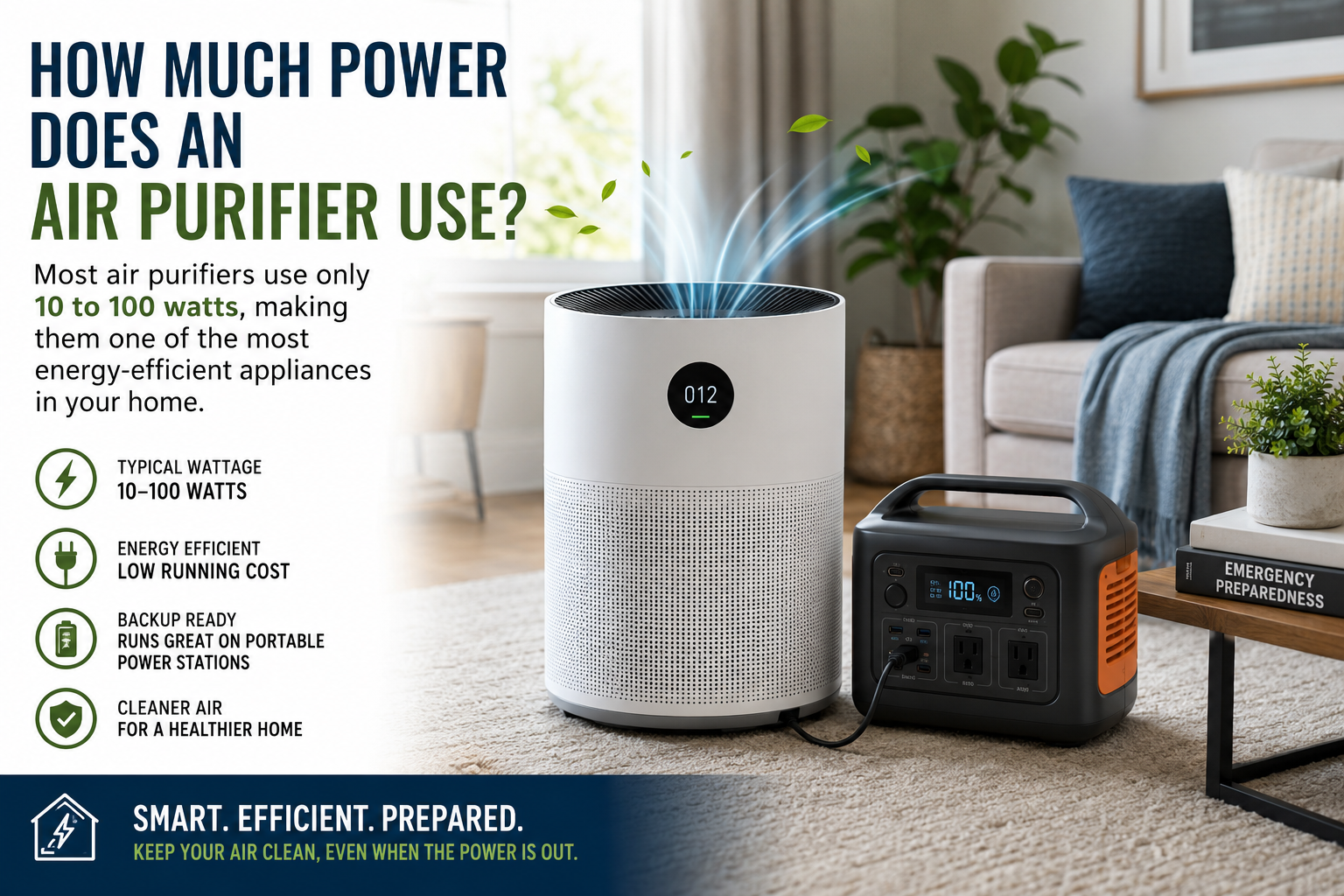
Depending on the model, filtration technology, and fan speed, most air purifiers use between 10 and 100 watts while operating. Even premium HEPA air purifiers generally consume far less electricity than refrigerators, portable air conditioners, or space heaters.
This guide explains typical wattage, operating costs, factors that affect energy consumption, and whether an air purifier is a practical appliance to include in your emergency backup power plan. For additional information about improving indoor air quality and choosing the right air cleaner, visit the U.S. Environmental Protection Agency’s Guide to Air Cleaners and Air Filters in the Home.
At a Glance
| Item | Details |
|---|---|
| Typical Running Wattage | 10–100 watts |
| Startup Surge | Minimal |
| Voltage | 120 volts |
| Energy Efficiency | Excellent |
| Portable Power Station Compatible | Yes |
| Best Backup Use | Maintaining indoor air quality during outages |
Printable Checklist
Before purchasing backup power for your air purifier:
- Identify your air purifier’s model number.
- Locate the manufacturer’s wattage specifications.
- Determine average daily runtime.
- Verify your portable power station’s continuous output rating.
- Calculate total household backup loads.
- Test your backup power plan before storm season.
How Much Power Does an Air Purifier Use?
The amount of electricity an air purifier uses depends primarily on its motor size, filtration system, and fan speed.
Typical power consumption includes:
- Small desktop air purifiers: 10–30 watts
- Medium room HEPA purifiers: 30–60 watts
- Large room air purifiers: 60–100 watts
Some commercial or whole-home air purification systems may consume more power, but most residential units remain well below 100 watts.
Because air purifiers are designed to operate continuously, manufacturers place a strong emphasis on energy efficiency.
What Affects Electricity Usage?
Several factors determine how much electricity your air purifier actually consumes.
Fan Speed
Higher fan speeds move more air through the filters but also increase electricity usage. Running the purifier on low or automatic mode often provides an excellent balance between air quality and energy efficiency.
Filter Type
HEPA filters, activated carbon filters, UV-C purification systems, and ionizers all influence overall power consumption. Units with multiple purification technologies may require slightly more electricity than basic HEPA-only models.
Room Size
Larger rooms often require larger air purifiers with more powerful fans, resulting in higher wattage.
Automatic Air Quality Sensors
Many modern air purifiers automatically adjust fan speed based on indoor air quality. When air quality improves, the purifier may reduce its power consumption automatically.
Estimated Operating Costs
Because air purifiers typically consume relatively little electricity, operating costs are usually modest.
For many homeowners, running an air purifier 24 hours a day costs only a few dollars per month, depending on:
- Local electricity rates
- Fan speed
- Hours of operation
- Air purifier efficiency
This makes air purifiers one of the least expensive household appliances to operate continuously.
Why Air Purifiers Are Excellent Backup Power Candidates
Unlike heating appliances or large kitchen appliances, air purifiers require relatively little electricity.
Their low power consumption means they can often operate for many hours—or even days—when connected to an appropriately sized portable power station.
For households with:
- Allergies
- Asthma
- Respiratory conditions
- Wildfire smoke concerns
- Pets
maintaining indoor air quality during an extended outage may be an important part of an emergency preparedness plan.
Can a Portable Power Station Run an Air Purifier?
In almost every case, yes.
Most residential air purifiers require relatively little electricity, making them one of the easiest household appliances to operate from a portable power station during a power outage.
Because many air purifiers consume between 10 and 100 watts, even a modest portable power station can often power the unit for many hours before requiring a recharge.
Before connecting your air purifier, verify:
- Continuous output rating
- Battery capacity
- AC outlet compatibility
- Manufacturer’s electrical specifications
Since startup surge is typically very low, most portable power stations have no difficulty operating a residential air purifier.
Estimating Runtime
Runtime depends on two primary factors:
- The air purifier’s power consumption
- The battery capacity of the portable power station
For example:
- A purifier operating at 20 watts may run for many hours on a relatively small battery.
- A purifier operating at 80–100 watts will reduce runtime but is still considered an efficient appliance compared to most household equipment.
Using lower fan speeds can significantly extend runtime during prolonged outages.
Choosing the Right Backup Power Solution
When selecting a portable power station for your air purifier, consider the following:
Continuous Output
Verify the power station’s continuous AC output exceeds your purifier’s running wattage.
Battery Capacity
Larger batteries provide longer operating times and allow additional appliances to run simultaneously.
Other Essential Devices
Many homeowners also want backup power for:
- Refrigerator
- Internet modem and router
- Phone chargers
- LED lighting
- CPAP machine
- Fans
Adding these appliances together helps determine the appropriate battery capacity for your emergency power plan.
Expert Tips
- Replace filters according to the manufacturer’s schedule to maintain airflow and efficiency.
- Clean pre-filters regularly to reduce strain on the fan motor.
- Use automatic mode whenever possible to reduce unnecessary energy consumption.
- Keep your portable power station fully charged during storm season.
- Test your backup power system before an emergency occurs.
Common Mistakes to Avoid
Avoid these common mistakes:
- Assuming all air purifiers consume the same amount of electricity.
- Ignoring manufacturer wattage specifications.
- Forgetting to include other appliances in your backup power calculations.
- Running the purifier on maximum speed continuously when lower settings are sufficient.
- Waiting until an emergency to test your backup equipment.
Frequently Asked Questions
Does an air purifier use a lot of electricity?
No. Most residential air purifiers consume between 10 and 100 watts, making them one of the most energy-efficient household appliances.
Can I run an air purifier all day?
Yes. Most air purifiers are specifically designed for continuous operation and are engineered to operate efficiently for extended periods.
Can a portable power station run an air purifier?
Yes. Because air purifiers require relatively little electricity, they are excellent candidates for portable power stations during power outages.
Should I keep my air purifier running during a power outage?
If battery capacity allows, maintaining indoor air quality may be especially beneficial for households with allergies, asthma, pets, or concerns about wildfire smoke.
Key Takeaways
- Most air purifiers use between 10 and 100 watts.
- Air purifiers are among the most energy-efficient appliances in the home.
- Most portable power stations can operate residential air purifiers with ease.
- Lower fan speeds increase battery runtime during outages.
- Always verify your manufacturer’s specifications before selecting backup power equipment.
Conclusion
Understanding how much power an air purifier uses can help you estimate operating costs, improve emergency preparedness, and select the right portable power station. Because most residential air purifiers consume relatively little electricity, they are an excellent choice for backup power during outages. By reviewing your unit’s specifications and planning ahead, you can continue maintaining healthy indoor air even when utility power is unavailable.