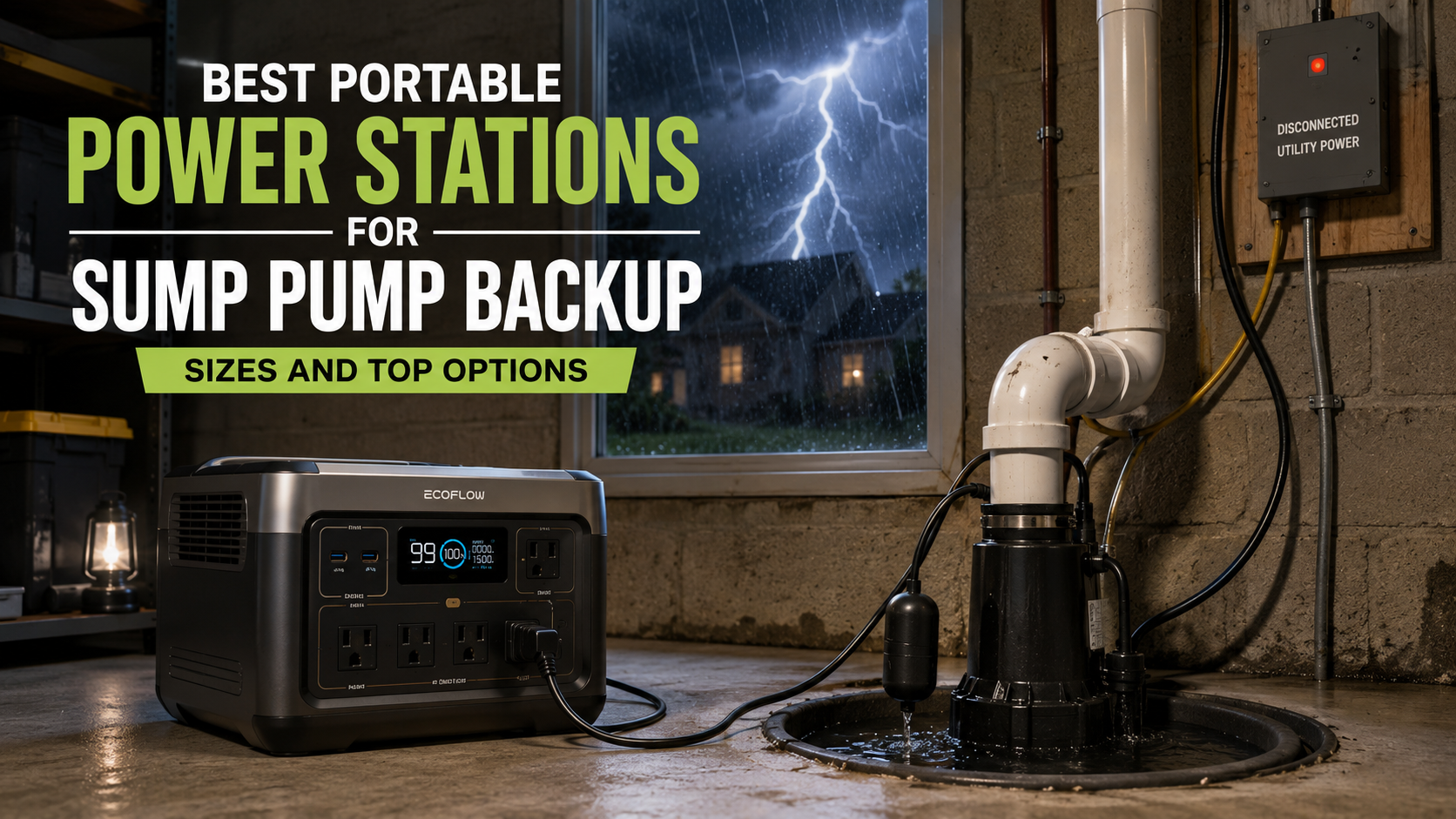
Power outages often happen during the same storms that put the greatest demand on your sump pump. If your basement depends on a sump pump to stay dry, choosing the right portable power station can mean the difference between a dry basement and thousands of dollars in water damage.
The challenge is that sump pumps aren’t like televisions or laptops. Their electric motors require a large burst of power when they first start. A portable power station that appears large enough based on its advertised wattage may still fail if it can’t handle the pump’s startup surge.
This guide explains how to choose the correct size portable power station, which features matter most, and the best types of units for reliable sump pump backup.
Why Sump Pumps Are Different From Most Appliances
Most household electronics draw a fairly steady amount of electricity.
Sump pumps do not.
Every time the float switch activates, the motor must overcome inertia to begin moving water. During that brief moment, the pump may require two to three times its normal running wattage before settling into its continuous power draw. Choosing a power station based only on running watts can leave you with a system that shuts down the instant the pump starts. Experts recommend matching both the running load and the startup surge when selecting backup power for motor-driven equipment.
U.S. Department of Energy guidance on emergency preparedness and backup power.
Step 1: Determine Your Sump Pump Size
Start by identifying your pump’s horsepower (HP). You’ll usually find it on the motor label or in the owner’s manual.
Typical residential pumps include:
| Pump Size | Typical Running Watts | Typical Starting Surge |
|---|---|---|
| 1/4 HP | 300–500 W | 800–1,000 W |
| 1/3 HP | 500–800 W | 1,200–1,800 W |
| 1/2 HP | 800–1,000 W | 2,000–2,500 W |
| 3/4 HP | 1,000–1,500 W | 2,500–3,500 W |
Actual power requirements vary by manufacturer, pump design, discharge height, and plumbing configuration.
Step 2: Choose the Right Portable Power Station Size
Rather than shopping by battery capacity alone, consider three specifications together:
- Continuous AC output
- Surge (peak) output
- Battery capacity (Wh)
For most homeowners:
Small Basements
Ideal for:
- 1/4 HP pumps
- Occasional cycling
- Finished basements with minimal water intrusion
Recommended minimum:
- 1,000–1,200Wh battery
- 1,500W inverter
- 2,000W surge capacity
Average Homes
Ideal for:
- Most 1/3 HP pumps
- Moderate rainfall
- Typical residential sump systems
Recommended minimum:
- 2,000Wh battery
- 2,000W inverter
- 3,000–4,000W surge
Many homeowners find the 2kWh class offers the best balance between runtime, surge capability, portability, and price for sump pump backup.
Heavy Water Conditions
Ideal for:
- 1/2 HP pumps
- Frequent cycling
- High water tables
- Long outages
Recommended:
- 3,000Wh or larger
- Expandable battery capability
- 3,000W+ inverter
- Higher surge capacity
Larger systems provide additional runtime during prolonged storms and allow other essentials—such as a refrigerator, modem, or lights—to run alongside the sump pump.
Top Portable Power Station Recommendations
When shopping for a portable power station for sump pump backup, prioritize models with strong inverter performance, reliable surge handling, fast recharging, and expandable battery options if your area experiences extended outages.
Best Overall
EcoFlow DELTA Pro 3
Best for:
- 1/3 HP to 1/2 HP sump pumps
- Whole-home emergency preparedness
- Long-duration outages
Why it stands out:
- High continuous AC output
- Excellent surge capability
- Expandable battery system
- Fast AC and solar charging
- Excellent mobile app controls
Potential drawbacks:
- Premium price
- Heavy compared to smaller units
Best Value
Jackery Explorer 2000 Plus
Best for:
- Average homeowners
- Moderate rainfall areas
- Reliable emergency backup
Highlights:
- Large battery capacity
- Expandable storage
- Pure sine wave inverter
- Simple operation
- Good portability for its size
Best for Larger Pumps
BLUETTI AC300 with B300K Battery
Ideal for:
- Large basements
- Heavy-duty sump pumps
- Homes with frequent flooding
Advantages:
- Very high surge capability
- Modular battery expansion
- Multiple AC outlets
- Excellent long-term backup solution
Best Budget Option
EcoFlow DELTA 2 Max
Ideal for:
- Smaller sump pumps
- Homeowners wanting excellent value
- Multi-purpose emergency backup
Advantages:
- Strong inverter
- Good runtime
- Fast recharge
- Excellent solar compatibility
How Long Will a Portable Power Station Run a Sump Pump?
Runtime depends on two factors:
- Battery capacity
- How often the pump cycles
A sump pump usually runs intermittently rather than continuously, so actual backup time is often much longer than many homeowners expect.
For example:
| Battery Capacity | Light Pump Cycling | Moderate Cycling | Heavy Cycling |
|---|---|---|---|
| 1,000Wh | Several hours | 2–5 hours | 1–2 hours |
| 2,000Wh | 8–15 hours | 5–10 hours | 3–6 hours |
| 3,000Wh+ | 12–24+ hours | 8–16 hours | 5–10+ hours |
These estimates assume the sump pump is the primary connected load. Runtime varies based on pump horsepower, battery age, inverter efficiency, water inflow, and discharge conditions.
Can You Recharge While Running the Pump?
Yes.
Many premium portable power stations support pass-through charging, allowing the battery to recharge while simultaneously powering connected devices.
This is especially valuable when paired with foldable or rooftop solar panels during multi-day outages. Even partial daytime solar charging can significantly extend backup time if weather conditions permit.
Other Features Worth Looking For
When comparing portable power stations, look beyond battery capacity.
Useful features include:
- Pure sine wave AC inverter
- High surge output
- LiFePO₄ battery chemistry
- Expandable battery capability
- Fast wall charging
- Solar charging support
- Weather-resistant storage case
- Mobile app monitoring
- Multiple AC outlets
- Five-year warranty or longer
These features improve long-term reliability and make the power station useful for camping, RV travel, home backup, and other emergency applications.
Frequently Asked Questions
Can a portable power station replace a dedicated sump pump battery backup?
Not entirely.
A dedicated battery backup system automatically activates when utility power fails and is permanently connected to the sump pump. A portable power station requires manual setup unless your installation is specifically designed for quick connection. Many homeowners use a portable power station as a versatile emergency backup that can also power refrigerators, lights, communications equipment, and medical devices.
Will a 1,000Wh portable power station run my sump pump?
It depends on the pump size and cycling frequency.
For many 1/4 HP sump pumps, a quality 1,000Wh unit with sufficient surge capacity can provide several hours of backup. Larger pumps or heavy storm conditions typically require more battery capacity.
Is solar charging practical during storms?
Solar production is reduced by clouds and rain, but portable solar panels can still generate meaningful power whenever daylight is available. Solar charging becomes especially valuable after the storm passes or during prolonged outages lasting several days.
Final Thoughts
A portable power station is one of the most flexible emergency preparedness investments a homeowner can make. By selecting a unit with enough continuous output, adequate surge capacity, and sufficient battery storage for your sump pump, you can protect your basement while also keeping essential household devices running during an outage.
For most homes, a 2,000Wh-class portable power station offers an excellent balance of power, runtime, portability, and long-term value. Homes with larger pumps, frequent flooding, or extended outage risks should consider expandable systems that provide additional battery capacity and higher inverter output for greater peace of mind.
Related Articles
- Can a Portable Power Station Run a Sump Pump?
- How Much Power Does a Sump Pump Use?
- How to Choose the Right Size Portable Power Station for Your Home
- How Much Battery Capacity Do I Need for Backup Power?
- Best Portable Power Stations for Home Backup (2026 Guide)
- Best Ways to Extend Portable Power Station Runtime During an Outage