A home battery backup system can protect your house during a power outage, but can it actually pay for itself?
In 2026, the answer depends heavily on where you live, how your utility prices electricity, whether you have solar panels, whether your utility offers a battery or virtual power plant program, and what you consider part of the battery’s financial value.
For many homeowners, a home battery should not be viewed as an investment with a guaranteed payback period. If the battery is purchased primarily for outage protection and your electricity rate provides little opportunity to save money by shifting energy use, direct utility-bill savings alone may not recover the full installed cost during the battery’s warranty period.
But the economics can change significantly when a homeowner can combine several sources of value: time-of-use electricity savings, increased use of home-generated solar energy, utility or virtual power plant payments, state or local incentives, and avoided outage costs.
This guide shows you how to calculate a realistic home battery payback period rather than relying on a generic national estimate.
Home Battery Payback Period: Quick Answer
The basic calculation is straightforward:
Battery Payback Period = Net Installed Cost ÷ Annual Financial Benefit
For example, if a battery system costs $15,000 after available incentives and produces $1,000 per year in measurable electricity savings and utility-program payments, the simple payback period would be approximately 15 years.
If the same system produces only $500 per year in measurable savings, simple payback stretches to approximately 30 years.
If annual value reaches $1,500, simple payback falls to approximately 10 years.
| Net Battery Cost | Annual Financial Benefit | Simple Payback |
|---|---|---|
| $15,000 | $500/year | 30 years |
| $15,000 | $750/year | 20 years |
| $15,000 | $1,000/year | 15 years |
| $15,000 | $1,500/year | 10 years |
| $15,000 | $2,000/year | 7.5 years |
EnergyReadyHome interpretation: the economics aren’t determined by the battery alone. They are determined by the relationship between the battery’s net installed cost and the specific ways your home and utility allow that battery to create financial value.
The Federal Battery Tax Credit Changed in 2026
This is one reason older home-battery payback estimates can now be misleading.
Battery storage technology previously qualified for the federal Residential Clean Energy Credit when eligibility requirements were met. However, current IRS guidance for the Residential Clean Energy Credit states that the credit is not available for qualified clean-energy property after December 31, 2025.
That means a homeowner evaluating a new battery purchase in 2026 should not automatically subtract the former 30% federal residential credit when calculating the project’s net cost.
State, local, utility, manufacturer, or other programs may still be available depending on location and eligibility. Those should be evaluated separately using current program rules.
The Five Sources of Financial Value From a Home Battery
A useful payback analysis should consider more than one possible source of savings.
For most homeowners, the financial value can come from some combination of these five areas:
- Time-of-use electricity savings
- Greater use of electricity produced by your solar panels
- Utility or virtual power plant payments
- State, local, utility, or other available incentives
- Avoided financial losses during power outages
The first four can often be estimated in dollars. The fifth is more household-specific because the value of outage protection varies dramatically from one homeowner to another.
1. Time-of-Use Electricity Savings
A battery can create financial value when your utility charges substantially different electricity prices at different times of day.
The basic strategy is sometimes called energy arbitrage.
The battery charges when electricity is less expensive—or from available solar production—and supplies the home when grid electricity is more expensive.
Suppose, purely as an example, your off-peak electricity price is $0.15 per kWh and your peak price is $0.35 per kWh.
The theoretical price spread is:
$0.35 − $0.15 = $0.20 per kWh
If you could shift 8 kWh of electricity from the lower-cost period to the higher-cost period on 300 days per year, the simplified gross value before accounting for battery losses and other factors would be:
8 kWh × $0.20 × 300 days = $480 per year
That’s useful—but it also demonstrates why electricity-rate arbitrage alone doesn’t necessarily produce a short payback period on a battery costing many thousands of dollars.
Your actual calculation should use your utility’s current rate structure, your household consumption profile, battery efficiency, and the amount of energy you can realistically shift.
2. Using More of Your Own Solar Electricity
Solar changes the economics because a battery can store electricity your panels produce during the day and make it available later.
How valuable that is depends heavily on what your utility would otherwise pay or credit you for electricity exported to the grid.
If exported solar receives nearly the same value as electricity you later purchase from the grid, storing that electricity may provide relatively little additional financial benefit.
If the utility compensates exported solar at a much lower rate than the retail price you pay for electricity, keeping more solar energy behind the meter can become substantially more valuable.
For example, imagine that one excess kilowatt-hour of solar electricity would earn a $0.08 export credit, while buying a kilowatt-hour later costs $0.30.
Using that stored solar energy later instead of exporting and repurchasing it creates a theoretical gross value difference of:
$0.30 − $0.08 = $0.22 per kWh
Again, battery conversion losses and system behavior need to be included in a real calculation, but this illustrates why the local solar-compensation structure can materially change battery economics.
3. Utility and Virtual Power Plant Payments
Some utilities and energy providers compensate participating battery owners for allowing stored energy to help support the electrical grid during periods of high demand.
These arrangements are commonly associated with virtual power plants (VPPs) or demand-response programs.
Instead of thousands of home batteries operating independently, participating batteries can be coordinated to behave like a larger grid resource.
For the homeowner, qualifying programs can create an additional revenue stream that improves battery economics.
The amount and structure vary widely. Programs may compensate participants based on battery capacity, actual performance, energy dispatched, event participation, or other program-specific requirements.
That means you shouldn’t assume VPP income when calculating payback unless you’ve confirmed that:
- Your utility or energy provider offers a qualifying program.
- Your battery model is eligible.
- Your system configuration qualifies.
- You understand how frequently the battery may be dispatched.
- You know the current compensation structure.
- You understand how participation could affect the battery’s available backup reserve.
A strong utility program can materially improve the economics. No available program means this portion of the payback calculation should simply be zero.
4. State, Local and Utility Incentives
The loss of the federal residential battery credit does not necessarily mean every homeowner pays the full retail installed cost.
Depending on where you live, you may still have access to state, local, utility, manufacturer, or other programs that reduce the upfront cost of battery storage or provide ongoing compensation.
Because payback is calculated from your net installed cost, an incentive can have a major effect on the result.
Consider this simplified EnergyReadyHome example:
| Scenario | Net Cost | Annual Financial Benefit | Simple Payback |
|---|---|---|---|
| No additional incentive | $15,000 | $1,000 | 15 years |
| $3,000 incentive | $12,000 | $1,000 | 12 years |
| $5,000 incentive | $10,000 | $1,000 | 10 years |
The examples are intentionally simple. Actual programs can have eligibility requirements, enrollment rules, funding limits, equipment restrictions, performance requirements, or other conditions.
Always calculate payback using incentives you have confirmed you qualify for—not incentives that may have existed in the past or that are available in another state or utility territory.
5. What Is Outage Protection Worth to You?
This is where a purely financial payback calculation becomes incomplete.
A home battery is not purchased only to reduce an electric bill. For many households, its primary purpose is backup power.
That protection can have economic value even though it doesn’t appear as a monthly utility-bill credit.
Depending on the household, an outage can potentially result in spoiled refrigerated or frozen food, lost work time, hotel expenses, interruption of home medical or communications equipment, sump-pump concerns, or other costs.
But those costs are highly individual and unpredictable, so EnergyReadyHome does not recommend inflating a battery’s projected return by assigning an arbitrary dollar value to every avoided outage.
Instead, separate your decision into two questions:
- What measurable financial return can the battery produce?
- How much are you personally willing to pay for backup power and resilience?
That produces a much more realistic decision than pretending every benefit can be converted into a guaranteed investment return.
EnergyReadyHome Payback Model: Three Example Households
The following examples show why there is no universal home battery payback period. These are hypothetical planning scenarios, not estimates of what a specific homeowner will save.
Scenario A: Backup-First Homeowner
This homeowner mainly wants protection from outages. Electricity prices are relatively stable, there is little difference between peak and off-peak rates, and no meaningful battery participation program is available.
| Net installed cost | $15,000 |
| Estimated annual bill savings | $300 |
| Utility/VPP compensation | $0 |
| Total measurable annual benefit | $300 |
| Simple payback | 50 years |
From a direct financial-return perspective, this is a weak payback case.
That doesn’t necessarily make the battery a poor purchase. It means the homeowner is primarily buying resilience rather than financial return.
Scenario B: Solar + Time-of-Use Homeowner
This homeowner has solar panels, receives relatively modest compensation for exported solar electricity, and pays significantly higher electricity rates during peak periods.
| Net installed cost | $15,000 |
| Solar self-consumption value | $500/year |
| Time-of-use savings | $500/year |
| Total measurable annual benefit | $1,000/year |
| Simple payback | 15 years |
Now the economics are considerably stronger because the battery is working throughout the year instead of sitting primarily in reserve for outages.
Scenario C: Solar + Time-of-Use + Utility Program
This household combines solar self-consumption, time-of-use savings and qualifying utility or virtual power plant compensation.
| Net installed cost | $12,000 |
| Solar/time-of-use value | $900/year |
| Utility/VPP compensation | $600/year |
| Total measurable annual benefit | $1,500/year |
| Simple payback | 8 years |
This illustrates the type of environment in which battery economics can become much more compelling.
It does not mean homeowners should expect an eight-year payback. The result depends entirely on actual installed cost, electricity rates, solar economics, incentives, utility-program compensation, system performance, and future changes to those variables.
Simple Payback Isn’t the Same as Investment Return
There is another important limitation to the examples above.
Simple payback tells you how long it would take cumulative annual financial benefits to equal the initial investment if those benefits remained constant.
It does not automatically account for:
- Battery degradation over time
- Round-trip efficiency losses
- Changes in electricity rates
- Changes in solar export compensation
- Changes in utility or VPP programs
- Financing costs
- Maintenance or repair expenses
- Opportunity cost of the money invested
- Equipment replacement
For that reason, a homeowner evaluating a battery primarily as a financial investment should go beyond simple payback and model expected cash flows over the system’s anticipated operating life.
Battery Warranty vs Payback Period
One useful reality check is to compare the calculated payback period with the battery’s warranty.
Suppose your simple payback calculation produces 18 years but the battery carries a 10-year limited warranty.
That doesn’t mean the battery will stop operating after 10 years. A warranty period is not the same thing as product life.
But an expected payback period substantially longer than the warranty should make you examine the assumptions carefully—especially if financial return is the main reason you’re considering the purchase.
Conversely, if a conservative calculation indicates that the system could recover its net cost comfortably within the warranty period, the financial case deserves closer attention.
How to Calculate Your Own Home Battery Payback Period
You can build a useful first-pass estimate with five numbers:
- Total installed system price
- Confirmed incentives or rebates
- Estimated annual electricity-bill savings
- Confirmed annual utility or VPP compensation
- Other measurable annual financial benefits you can reasonably document
First calculate net cost:
Net Cost = Installed Price − Confirmed Incentives
Then calculate annual measurable benefit:
Annual Benefit = Bill Savings + Utility/VPP Payments + Other Measurable Savings
Finally:
Simple Payback = Net Cost ÷ Annual Benefit
For example:
$18,000 installed cost − $3,000 confirmed incentive = $15,000 net cost
$800 annual electricity savings + $400 annual utility-program compensation = $1,200 annual benefit
$15,000 ÷ $1,200 = 12.5-year simple payback
Then stress-test the result.
What happens if annual savings are 20% lower than expected? What if a utility program changes? What if your household consumption changes?
A purchase that only works financially under the most optimistic assumptions deserves more scrutiny than one that still makes sense under conservative assumptions.
When Does a Home Battery Make the Most Financial Sense?
The financial case generally becomes stronger when several favorable conditions occur together:
- You have a meaningful difference between peak and off-peak electricity prices.
- You have solar and receive relatively low compensation for exported electricity.
- A qualifying utility or virtual power plant program provides additional compensation.
- A current state, local, utility, or other incentive reduces your net installed cost.
- Your battery can regularly create value without compromising the backup reserve you want to maintain.
- You expect to remain in the home long enough to realize the benefits.
The financial case generally becomes weaker when electricity is inexpensive and flat-priced, solar exports receive favorable compensation, no battery incentives or utility programs are available, or the battery will spend most of its life waiting for infrequent outages.
When a Long Payback Period Can Still Be Acceptable
Not every home-improvement purchase needs to pay for itself.
A standby generator, upgraded electrical panel, storm shutters and many other resilience improvements may be purchased because the homeowner values what they provide—not because they generate a conventional investment return.
A battery can be viewed similarly.
If a system costs $15,000 and only produces $500 per year in measurable savings, calling it a strong financial investment would be difficult to justify based on simple payback alone.
But a homeowner who highly values quiet automatic backup, solar integration and protection from recurring outages may still decide that the remaining cost is worth paying for resilience.
The important thing is to know which decision you’re making.
Questions to Ask Before Buying a Battery for Financial Savings
- What is the complete installed price?
- Which incentives do I currently qualify for?
- What does my utility charge during peak and off-peak periods?
- How is exported solar electricity compensated?
- Does my utility offer a battery, demand-response or virtual power plant program?
- Is my proposed battery eligible?
- How much battery capacity will remain reserved for outages?
- What round-trip efficiency should I use in the savings estimate?
- How does battery degradation affect the long-term calculation?
- What warranty applies?
- What happens to the economics if my estimated savings are lower than expected?
Ask an installer to show you the assumptions behind any projected savings or payback period rather than accepting a single headline number.
Home Battery Payback Period: Bottom Line
There is no single home battery payback period that applies nationwide.
A battery purchased primarily for emergency backup may have a very long direct financial payback period because much of its value comes from resilience rather than monthly electricity savings.
A battery that regularly shifts electricity away from expensive peak periods, increases the value of home-generated solar power, participates in a qualifying utility program, and benefits from available incentives can have substantially stronger economics.
The most useful question therefore isn’t simply:
“How many years until this battery pays for itself?”
It’s:
“How much measurable financial value will this battery create each year, and how much am I willing to pay separately for backup power?”
Keeping those two values separate gives you a much clearer picture of whether a home battery makes financial sense for your household.
Frequently Asked Questions
How long does it take a home battery to pay for itself?
There is no universal payback period. It depends on net installed cost and the annual value produced through electricity-bill savings, solar self-consumption, utility or virtual power plant programs, and other confirmed incentives or benefits. In some situations simple payback may fall within roughly a decade, while in weak savings environments it can extend well beyond the battery’s warranty period.
Can a home battery pay for itself from electricity savings alone?
Potentially, but not in every utility territory. The opportunity is generally stronger when there is a large difference between peak and off-peak electricity prices or when stored solar electricity is significantly more valuable when used in the home than when exported to the grid.
Does a home battery still qualify for the 30% federal tax credit in 2026?
For a new residential battery placed in service after December 31, 2025, homeowners should not assume the former federal Residential Clean Energy Credit applies. Current IRS guidance states that the credit is not available for qualified clean-energy property after December 31, 2025. Other state, local, utility, or manufacturer programs may still be available.
Does adding solar improve battery payback?
It can. Solar can improve battery economics when storing excess solar generation allows the homeowner to avoid purchasing more expensive electricity later. The benefit depends heavily on the utility’s retail electricity prices and compensation for exported solar power.
Should I buy a home battery if it doesn’t pay for itself?
That depends on your objective. If financial return is the primary goal, a long payback period is an important warning sign. If outage protection is the primary goal, you may reasonably place additional value on resilience even when direct bill savings do not recover the entire purchase price.
Related Articles
- How Much Does a Home Battery Backup System Cost in 2026?
- Best Home Battery Backup Systems for Power Outages (2026 Guide)
- How to Choose a Home Battery Backup System
- Whole-Home vs Partial-Home Battery Backup: Which Do You Need?
- Whole-Home Battery Backup vs Generator: Which Should You Buy?
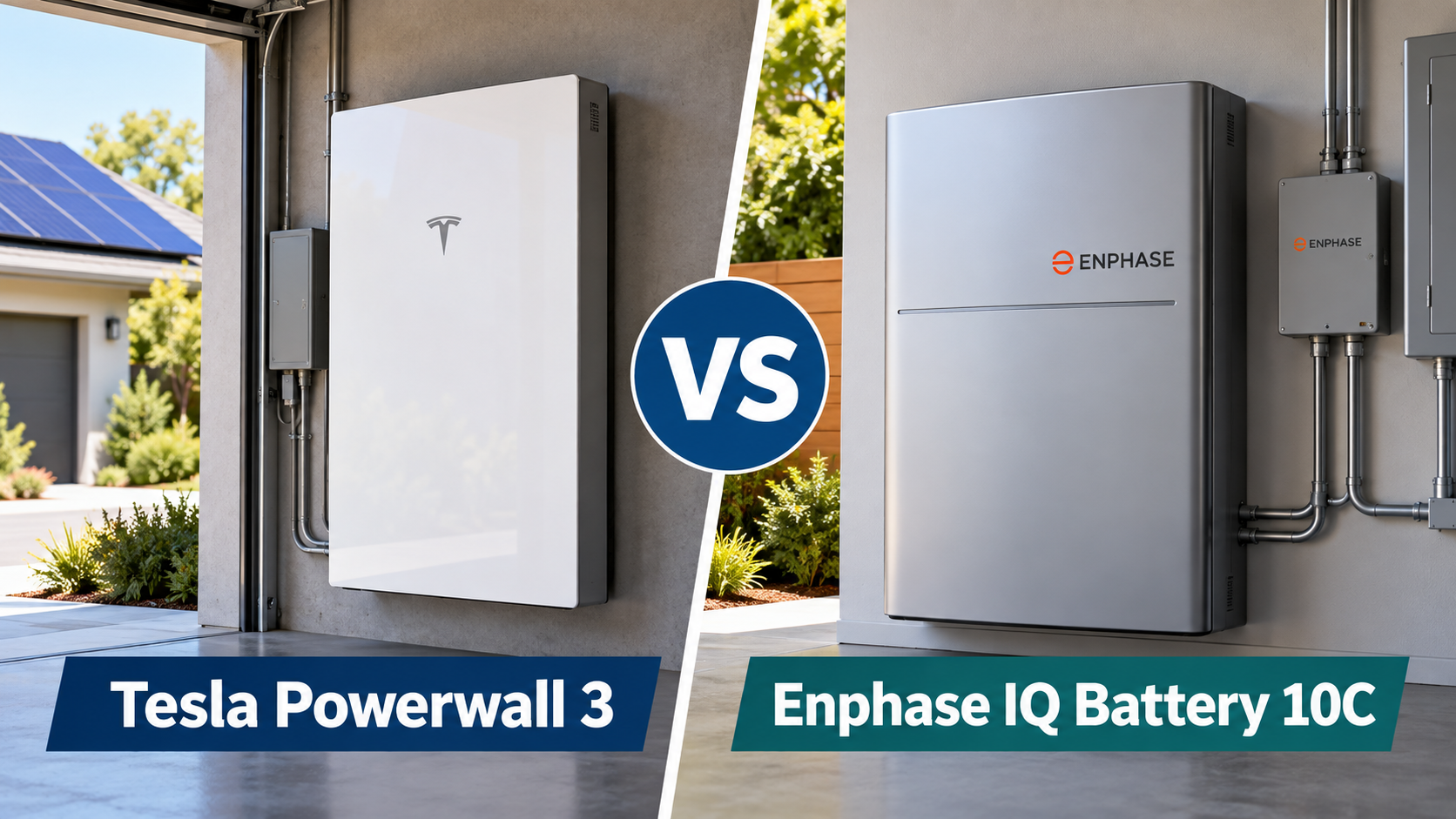
- Tesla Powerwall 3 vs Enphase IQ Battery 10C: Which Is Better for Home Backup in 2026?