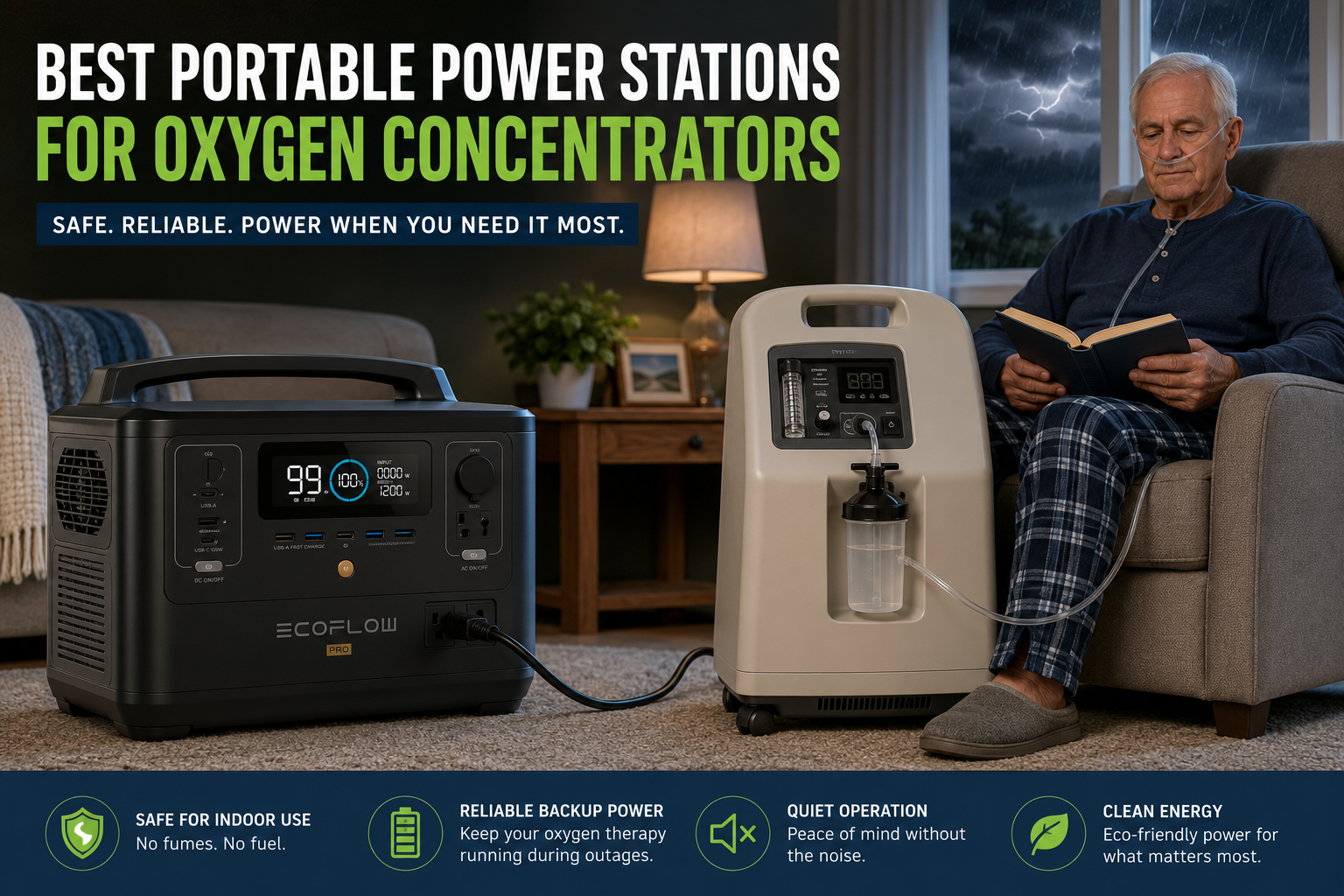
Power outages can be more than an inconvenience if you or a loved one relies on an oxygen concentrator. A loss of power can interrupt oxygen therapy, creating unnecessary stress and potentially serious health concerns. Choosing the right portable power station provides peace of mind by keeping your oxygen concentrator running safely until utility power is restored.
Not every portable power station is suitable for every oxygen concentrator, however. Battery capacity, continuous wattage, startup surge capability, and the type of oxygen concentrator you use all play an important role in selecting the right backup power solution.
This guide explains how to choose the best portable power station for an oxygen concentrator, what features matter most, and which models are best suited for different medical and emergency preparedness needs.
Why Every Oxygen Concentrator User Should Have Backup Power
Utility outages happen for many reasons, including:
- Severe storms
- Ice and snow
- High winds
- Utility equipment failures
- Planned maintenance
- Natural disasters
While outages may last only a few minutes, others can continue for several hours—or even days. Having a reliable backup power source allows you to continue oxygen therapy without relying solely on emergency services or leaving your home.
A portable power station offers several advantages over gasoline generators:
- Safe for indoor use
- No gasoline or diesel fuel required
- No carbon monoxide emissions
- Quiet operation
- Instant backup power
- Minimal maintenance
- Rechargeable for repeated use
For many households, a portable power station is the safest and most practical emergency backup solution.
Can a Portable Power Station Run an Oxygen Concentrator?
In most cases, yes.
Most modern portable power stations can safely operate many home oxygen concentrators, but the correct size depends on your specific equipment.
Factors that determine compatibility include:
- Continuous power draw (watts)
- Startup surge
- Hours of operation needed
- AC versus DC power requirements
- Whether the unit is continuous-flow or pulse-dose
The first step is identifying your concentrator’s electrical requirements.
Continuous-Flow vs. Pulse-Dose Oxygen Concentrators
Understanding the type of oxygen concentrator you own helps determine the size of backup battery you’ll need.
Continuous-Flow Oxygen Concentrators
These units provide oxygen continuously whether the user inhales or not.
They typically:
- Consume more electricity
- Require larger batteries
- Benefit from higher-capacity portable power stations
These are the most common home units prescribed for long-term oxygen therapy.
Pulse-Dose Oxygen Concentrators
Portable oxygen concentrators often deliver oxygen only when inhalation is detected.
Advantages include:
- Lower power consumption
- Longer battery runtime
- Smaller backup power stations may be sufficient
However, always verify the power requirements listed by the manufacturer before purchasing a backup power station.
How to Determine the Right Size Portable Power Station
Before shopping, collect three pieces of information from your oxygen concentrator:
1. Running Wattage
Most oxygen concentrators consume between 100 and 600 watts, depending on:
- Flow rate
- Compressor size
- Manufacturer
- Oxygen delivery method
The owner’s manual or data plate typically lists the electrical specifications.
2. Startup Surge
Some concentrators briefly require additional power when the compressor starts.
A portable power station should comfortably exceed both:
- Continuous wattage
- Startup surge requirements
Buying a power station with additional headroom also allows you to power small essentials such as:
- Phone chargers
- Lamps
- Medical monitoring devices
3. Desired Runtime
Ask yourself:
- Do I need backup for two hours?
- Overnight?
- A full day?
- Multiple days with solar charging?
Runtime determines battery capacity more than output wattage.
For overnight protection, larger-capacity LiFePO₄ power stations are usually the better investment because they provide longer runtimes and significantly longer battery life.
Features to Look for in a Portable Power Station
Not all models are designed for medical backup use.
Prioritize these features.
Pure Sine Wave AC Output
Medical devices should always be powered using a pure sine wave inverter.
Pure sine wave electricity closely matches household utility power and helps sensitive electronics operate safely and efficiently.
Avoid inexpensive modified sine wave inverters for oxygen concentrators.
LiFePO₄ Battery Technology
Lithium Iron Phosphate (LiFePO₄) batteries offer several important advantages:
- Longer lifespan
- Improved safety
- Better thermal stability
- Thousands of charge cycles
- Lower long-term replacement costs
Most premium portable power stations now use LiFePO₄ batteries, making them an excellent choice for emergency medical preparedness.
Pass-Through Charging
Some portable power stations support pass-through charging, allowing the battery to recharge while simultaneously powering connected devices.
This feature can be especially valuable during extended outages when alternating between utility power and battery backup.
Multiple Charging Options
Look for models that support:
- Standard wall charging
- Vehicle charging
- Solar charging
Multiple charging methods increase flexibility during prolonged emergencies.
Recommended Portable Power Stations by User Needs
Every household has different backup power requirements. The best portable power station depends on the type of oxygen concentrator you use, how long you need backup power, and whether you want the option to recharge using solar panels during an extended outage.
Rather than focusing on a single “best” model, consider which category best matches your needs.
Best Overall Choice
Important: Always verify the power requirements of your oxygen concentrator and consult the equipment manufacturer before relying on any portable power station for medical backup.
The EcoFlow DELTA 3 Plus is an excellent overall choice because it combines a long-lasting LiFePO₄ battery, fast AC recharging, pure sine wave output, and enough capacity to keep most home oxygen concentrators operating during a power outage while also powering other essential devices.
Disclosure: As an Amazon Associate, EnergyReadyHome may earn from qualifying purchases. This comes at no additional cost to you.
Why we recommend it:
- Long runtime for extended outages
- Reliable pure sine wave power for sensitive medical equipment
- Expandable battery options for longer backup
- Long-lasting LiFePO₄ battery technology
- Multiple AC outlets for powering additional devices
- Fast AC and solar charging
These features make it an excellent choice for households that rely on an oxygen concentrator and want dependable emergency backup power for phones, tablets, lighting, and other essential devices during a power outage. Before purchasing, confirm your oxygen concentrator’s continuous power requirements, any startup surge requirements, and expected runtime to ensure the power station meets your emergency backup needs.
Best for Overnight Backup
Important: Always verify the power requirements of your oxygen concentrator and consult the equipment manufacturer before relying on any portable power station for medical backup.
The BLUETTI AC180 is an outstanding choice for overnight backup thanks to its larger battery capacity, reliable pure sine wave AC output, and fast recharge capability. For many home oxygen concentrators, it can provide significantly longer runtime than smaller portable power stations, making it an excellent option for sleeping through an overnight power outage with greater peace of mind.
Disclosure: As an Amazon Associate, EnergyReadyHome may earn from qualifying purchases. This comes at no additional cost to you.
Why we recommend it:
- Larger battery capacity for extended overnight runtime
- Reliable pure sine wave AC output for sensitive medical equipment
- Long-lasting LiFePO₄ battery with thousands of charge cycles
- Fast AC charging to quickly prepare for future outages
- Multiple AC, USB-A, USB-C, and DC output ports
- Portable enough for home use while offering substantially more capacity than entry-level models
The BLUETTI AC180 is an excellent solution for users who want greater confidence that their oxygen concentrator can continue operating through the night during an unexpected outage. Before purchasing, confirm your oxygen concentrator’s continuous power requirements, any startup surge requirements, and expected runtime to ensure the power station meets your emergency backup needs.
Best Budget Option
Important: Always verify the power requirements of your oxygen concentrator and consult the equipment manufacturer before relying on any portable power station for medical backup.
The Jackery Explorer 300 Plus is an excellent budget-friendly choice for households looking for reliable emergency backup during shorter power outages. It features a long-lasting LiFePO₄ battery, pure sine wave AC output, compact portability, and simple operation, making it a practical solution for keeping many oxygen concentrators powered when utility service is interrupted.
Disclosure: As an Amazon Associate, EnergyReadyHome may earn from qualifying purchases. This comes at no additional cost to you.
Why we recommend it:
- Affordable entry point for emergency backup power
- Compact and lightweight for easy storage and transport
- Pure sine wave AC output for sensitive medical equipment
- Long-lasting LiFePO₄ battery technology
- Fast USB-C and AC charging
- Quiet, maintenance-free operation
The Jackery Explorer 300 Plus is an excellent option for users with lower-power oxygen concentrators or those seeking an affordable backup solution for short-duration outages. Before purchasing, confirm your oxygen concentrator’s continuous power requirements, any startup surge requirements, and expected runtime to ensure the power station meets your emergency backup needs.
Best for Extended Multi-Day Outages
Important: Always verify the power requirements of your oxygen concentrator and consult the equipment manufacturer before relying on any portable power station for medical backup.
The EcoFlow DELTA 3 Plus is our top recommendation for extended multi-day outages because of its excellent combination of battery capacity, rapid recharging, expandable battery options, and dependable pure sine wave AC power. When paired with additional expansion batteries or compatible solar panels, it provides one of the most flexible backup power solutions available for households that depend on oxygen concentrators during prolonged emergencies.
Disclosure: As an Amazon Associate, EnergyReadyHome may earn from qualifying purchases. This comes at no additional cost to you.
Why we recommend it:
- Excellent battery capacity for long-duration outages
- Expandable battery system for significantly longer runtime
- Reliable pure sine wave AC output for sensitive medical equipment
- Ultra-fast AC charging to restore power quickly between outages
- Solar charging capability for extended emergency preparedness
- Long-lasting LiFePO₄ battery technology designed for years of reliable service
The EcoFlow DELTA 3 Plus is ideal for households preparing for severe weather, extended utility outages, or areas where power interruptions may last several days. Its expandable design allows users to increase available backup power as their needs change. Before purchasing, confirm your oxygen concentrator’s continuous power requirements, any startup surge requirements, and expected runtime to ensure the power station meets your emergency backup needs.
How Long Will a Portable Power Station Run an Oxygen Concentrator?
Runtime depends on several factors:
- Battery capacity
- Oxygen concentrator power consumption
- Flow setting
- Ambient temperature
- Inverter efficiency
Higher flow settings typically require more electricity, reducing available runtime.
Instead of relying on generic estimates, calculate your expected runtime using your concentrator’s actual wattage and the usable battery capacity of the portable power station you are considering.
Whenever possible, choose a model with additional capacity beyond your minimum needs. Extra reserve provides a valuable safety margin during unexpected or prolonged outages.
Is Solar Charging Worth It?
For many households, yes.
Portable solar panels can recharge compatible power stations during extended outages when utility power remains unavailable.
Benefits include:
- Renewable energy
- No fuel storage
- Quiet operation
- Lower long-term operating costs
- Increased emergency preparedness
Solar charging works best when paired with larger-capacity portable power stations designed to accept higher solar input.
Even if you don’t purchase solar panels immediately, selecting a power station that supports future solar expansion gives you greater flexibility.
Important Safety Tips
Backup power is an important part of an emergency preparedness plan, but it should never replace your healthcare provider’s recommendations.
Follow these safety practices:
- Test your backup system before an emergency.
- Keep the portable power station fully charged.
- Recharge after every use.
- Follow the oxygen concentrator manufacturer’s instructions.
- Never overload the power station.
- Store the battery in a cool, dry location.
- Review your utility company’s medical priority program if available.
If your oxygen therapy is medically critical, discuss emergency planning with your physician or oxygen equipment provider. FDA guidance on home use of oxygen concentrators
Frequently Asked Questions
Can I leave my oxygen concentrator plugged into a portable power station?
Many portable power stations support pass-through charging, allowing them to act as a backup while connected to household power. However, always verify that both your power station and oxygen concentrator manufacturers approve this type of operation.
Should I buy a gasoline generator instead?
Gasoline generators can provide backup power but must never be operated indoors or in enclosed spaces because they produce deadly carbon monoxide.
Portable power stations are much safer for indoor medical equipment because they produce no exhaust fumes and operate quietly.
Are LiFePO₄ batteries better for emergency backup?
Yes.
LiFePO₄ batteries generally offer:
- Longer service life
- Greater thermal stability
- Improved safety
- Thousands of charge cycles
- Lower long-term ownership costs
These characteristics make them an excellent choice for emergency medical preparedness.
Can one portable power station run other devices too?
Often, yes.
Depending on its capacity, a portable power station may also power:
- Cell phones
- Tablets
- LED lighting
- Internet equipment
- Fans
- Small electronics
However, avoid adding unnecessary loads if maintaining oxygen therapy is your highest priority.
Final Thoughts
A portable power station provides peace of mind by helping ensure your oxygen concentrator continues operating during unexpected power outages. Choosing the right model involves more than simply buying the largest battery available. Consider your concentrator’s power requirements, the runtime you need, future expansion options, and the reliability of the battery technology.
For many households, a LiFePO₄ portable power station with pure sine wave output, adequate battery capacity, and optional solar charging offers the best combination of safety, convenience, and long-term value. By planning ahead and testing your backup system before an emergency occurs, you can reduce stress and maintain greater confidence when the lights go out.
Related Articles
- Can a Portable Power Station Run an Oxygen Concentrator?
- Can a Portable Power Station Run a CPAP Machine?
- Backup Power for Medical Devices During a Power Outage
- Can a Portable Power Station Run a Medical Refrigerator?
- Can a Portable Power Station Run a Nebulizer?
- How Long Can Medical Devices Run on Backup Power?