Introduction
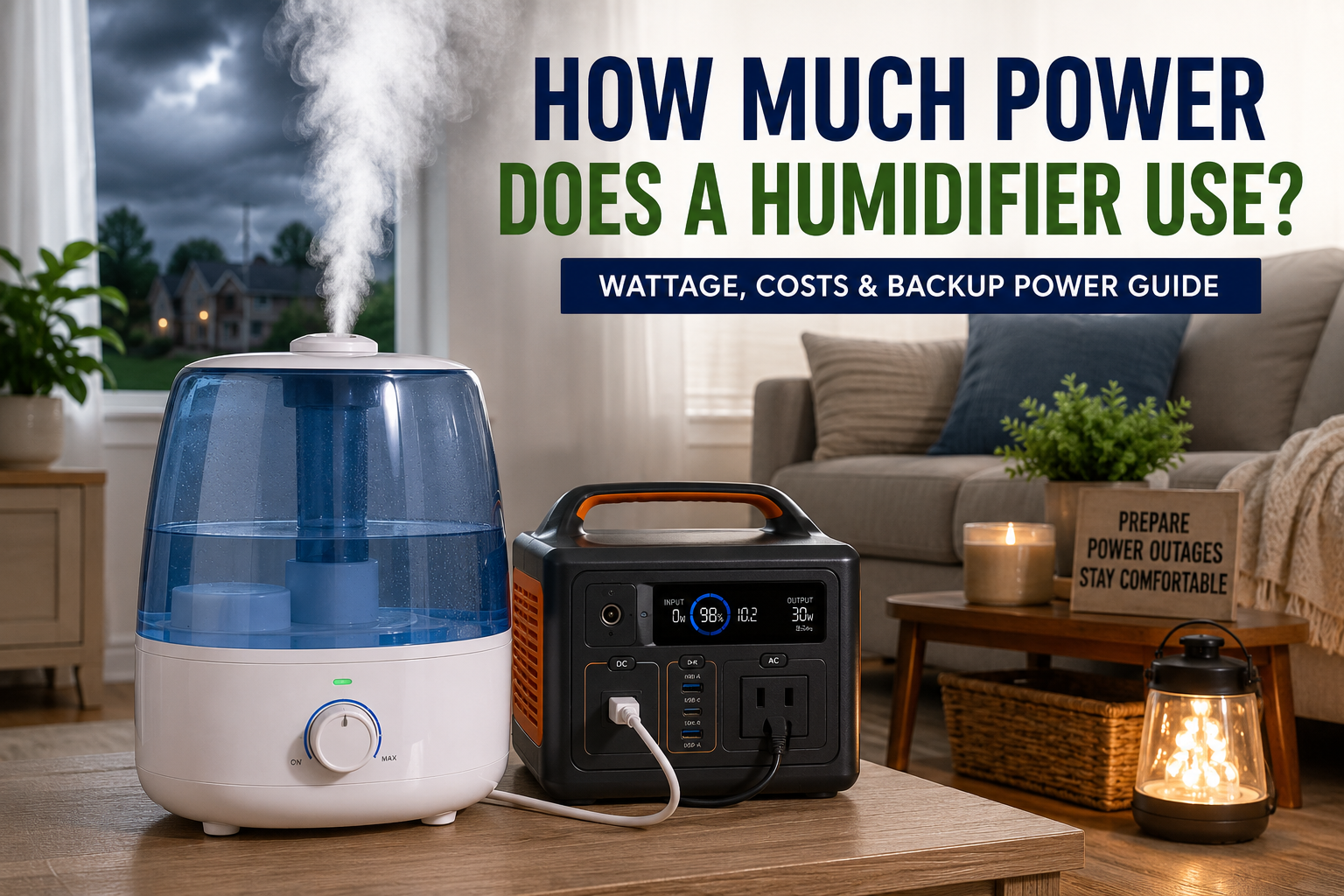
If you’re wondering how much power does a humidifier use, you’re asking an important question if you’re trying to reduce electricity costs or determine whether a portable power station can keep your humidifier running during a power outage. The good news is that most residential humidifiers use relatively little electricity, making them one of the more practical appliances to include in an emergency backup power plan.
Most portable humidifiers consume between 20 and 100 watts, depending on the type of humidifier, tank size, output setting, and whether it uses warm or cool mist technology. Understanding these differences can help you estimate operating costs and select the right backup power solution.
This guide explains typical humidifier wattage, factors affecting electricity usage, operating costs, and whether a portable power station can reliably power your humidifier during an outage. For additional guidance on maintaining healthy indoor humidity levels, visit the U.S. Environmental Protection Agency’s Indoor Air Quality resources.
At a Glance
| Item | Details |
|---|---|
| Typical Running Wattage | 20–100 watts |
| Startup Surge | Minimal |
| Voltage | 120 volts |
| Energy Efficiency | Good to Excellent |
| Portable Power Station Compatible | Yes |
| Best Backup Use | Maintaining indoor humidity during outages |
Printable Checklist
Before planning backup power for your humidifier:
- Identify your humidifier model.
- Determine whether it uses cool mist or warm mist technology.
- Locate the manufacturer’s wattage specifications.
- Verify your portable power station’s continuous output rating.
- Estimate desired runtime during an outage.
- Include other essential appliances in your backup power calculations.
How Much Power Does a Humidifier Use?
Humidifier power consumption depends largely on the technology used to produce moisture.
Typical electricity usage includes:
- Ultrasonic humidifiers: 20–40 watts
- Evaporative humidifiers: 30–60 watts
- Warm mist humidifiers: 200–500 watts
- Steam vaporizers: 300–600 watts
Most homeowners use ultrasonic or evaporative humidifiers, both of which are highly energy efficient compared to warm mist and steam models.
Always check your owner’s manual or the appliance label for your specific model’s electrical requirements.
What Affects Electricity Usage?
Several factors determine how much electricity your humidifier actually consumes.
Humidifier Type
Ultrasonic and evaporative humidifiers typically require much less electricity than warm mist units because they do not continuously heat water.
Output Setting
Running the humidifier on its highest output increases electricity usage. Lower settings often provide sufficient humidity while extending battery runtime.
Room Size
Larger rooms may require larger humidifiers or longer operating times to maintain comfortable humidity levels.
Humidity Sensor
Many modern humidifiers include built-in humidistats that automatically cycle the unit on and off, reducing electricity consumption once the desired humidity level is reached.
Estimated Operating Costs
Portable humidifiers are generally inexpensive to operate.
Actual operating costs depend on:
- Local electricity rates
- Hours of daily operation
- Humidifier type
- Output setting
- Seasonal usage
Ultrasonic humidifiers typically cost only a few cents per day to operate, making them one of the most energy-efficient appliances used for indoor comfort.
Why Humidifiers Are Good Backup Power Candidates
Most portable humidifiers require relatively little electricity, making them well suited for operation from portable power stations.
Maintaining proper indoor humidity during winter power outages may help improve comfort while reducing:
- Dry skin
- Dry throat
- Static electricity
- Wood furniture drying
- Respiratory discomfort
Because most cool mist humidifiers consume relatively little power, they can often operate for many hours on a properly sized portable power station.
Can a Portable Power Station Run a Humidifier?
In most cases, yes.
Most residential humidifiers consume relatively little electricity, making them excellent candidates for portable power stations during power outages. Ultrasonic and evaporative humidifiers are especially well suited because they typically require only 20 to 60 watts while operating.
Warm mist humidifiers and steam vaporizers require significantly more electricity because they heat water to create steam. While many larger portable power stations can operate these models, they will consume battery capacity much more quickly.
Before connecting your humidifier, verify:
- Continuous output rating
- Battery capacity
- Manufacturer’s wattage specifications
- Total household electrical load
Selecting the appropriate portable power station helps ensure reliable operation throughout an outage.
Estimating Runtime
Runtime depends on two primary factors:
- The humidifier’s power consumption
- The portable power station’s battery capacity
For example:
- An ultrasonic humidifier using 30 watts may operate for many hours on a mid-sized portable power station.
- A warm mist humidifier drawing 400 watts will reduce runtime considerably because of its higher energy requirements.
Using lower output settings whenever practical can help extend battery life during prolonged outages.
Choosing the Right Backup Power Solution
When selecting a portable power station for your humidifier, consider the following.
Continuous Output Rating
Ensure the portable power station’s continuous AC output comfortably exceeds the humidifier’s running wattage.
Battery Capacity
Larger batteries provide longer runtime and can support multiple essential household appliances simultaneously.
Additional Appliances
Many homeowners also plan to power:
- Air purifier
- Refrigerator
- Internet modem and router
- LED lighting
- Phone chargers
- CPAP machine
Including all anticipated electrical loads helps determine the proper battery capacity for your emergency preparedness plan.
Expert Tips
- Clean your humidifier regularly to maintain efficiency.
- Replace filters according to the manufacturer’s recommendations.
- Use distilled water when recommended to reduce mineral buildup.
- Keep your portable power station fully charged during storm season.
- Test your emergency backup setup before severe weather arrives.
Common Mistakes to Avoid
Avoid these common mistakes:
- Assuming every humidifier uses the same amount of electricity.
- Forgetting that warm mist models consume substantially more power.
- Ignoring the manufacturer’s wattage specifications.
- Overlooking additional household appliances when sizing backup power.
- Waiting until a power outage to test your emergency equipment.
Frequently Asked Questions
Does a humidifier use a lot of electricity?
No. Most ultrasonic and evaporative humidifiers use only 20 to 60 watts, making them highly energy efficient. Warm mist humidifiers generally use much more electricity because they heat water.
Can I run a humidifier continuously?
Yes. Many humidifiers are designed for extended operation and automatically cycle on and off when the desired humidity level is reached.
Can a portable power station run a humidifier?
Yes. Most portable power stations can easily power ultrasonic and evaporative humidifiers. Warm mist models may require larger battery capacities because of their higher wattage.
Which type of humidifier is the most energy efficient?
Ultrasonic humidifiers are generally among the most energy-efficient options because they create a fine mist without heating water.
Key Takeaways
- Most portable humidifiers use between 20 and 100 watts.
- Ultrasonic humidifiers are among the most energy-efficient models.
- Warm mist humidifiers consume significantly more electricity.
- Most portable power stations can easily operate cool mist humidifiers.
- Always verify your humidifier’s electrical specifications before selecting backup power equipment.
Conclusion
Understanding how much power a humidifier uses helps homeowners estimate operating costs, choose the right portable power station, and prepare for extended power outages. Because most cool mist humidifiers consume relatively little electricity, they are excellent candidates for emergency backup power. Reviewing your humidifier’s specifications and planning ahead ensures you’ll be better prepared to maintain comfortable indoor humidity when utility power is unavailable.