Introduction
If you’re wondering how much power does a ceiling fan use, you’re asking a smart question when trying to reduce electricity costs or prepare for emergency backup power. Ceiling fans are among the most energy-efficient appliances found in homes, providing excellent air circulation while consuming only a fraction of the electricity required by air conditioners.
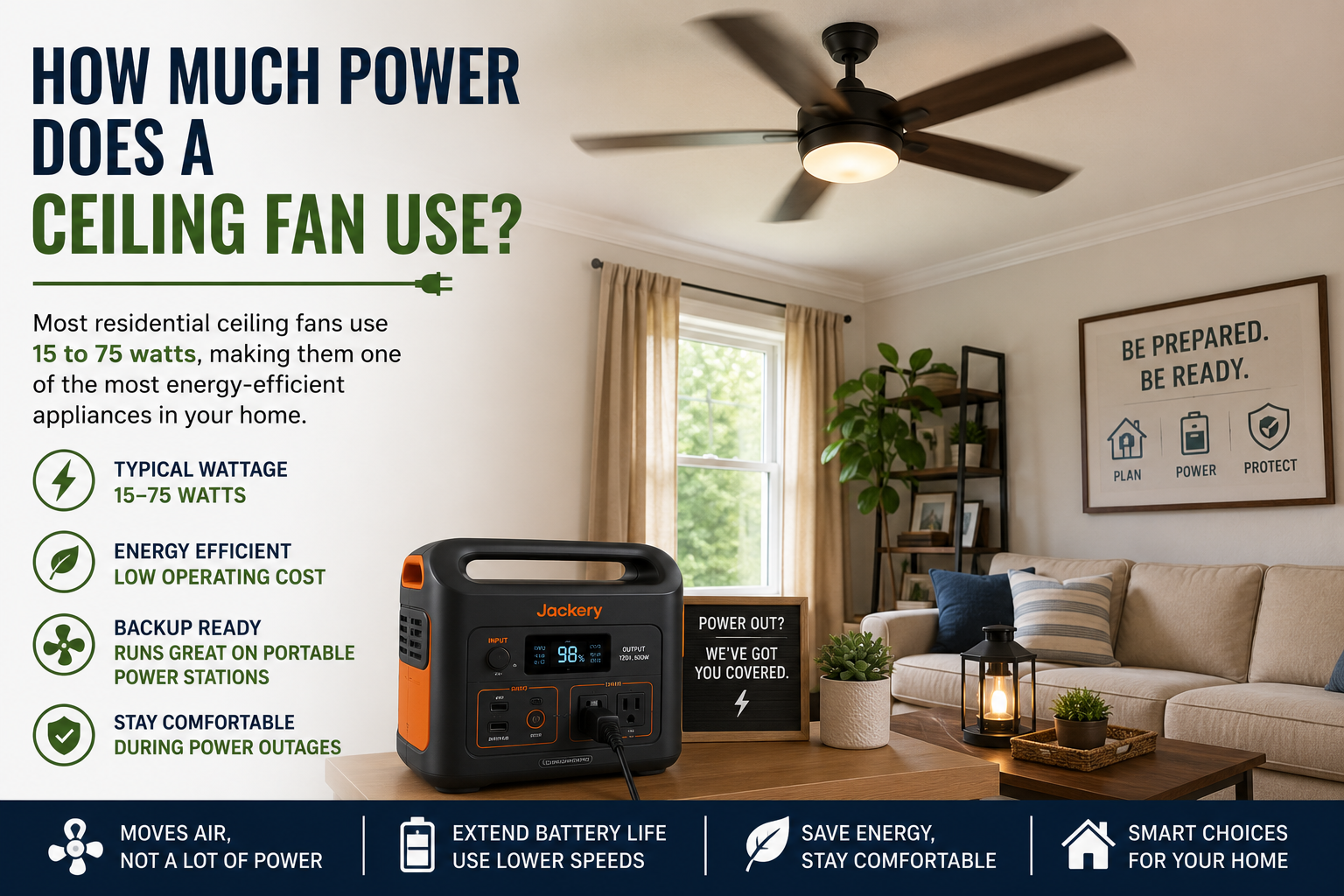
Most residential ceiling fans use between 15 and 75 watts, depending on blade size, motor efficiency, speed setting, and whether integrated lighting is operating. Because they consume relatively little electricity, ceiling fans are excellent candidates for portable power stations during power outages.
This guide explains typical ceiling fan wattage, operating costs, factors affecting energy consumption, and how to determine whether your portable power station can keep your fan running during an outage. For additional guidance on improving home cooling efficiency and reducing household energy use, visit the U.S. Department of Energy’s Home Cooling guidance.
At a Glance
| Item | Details |
|---|---|
| Typical Running Wattage | 15–75 watts |
| Startup Surge | Minimal |
| Voltage | 120 volts |
| Energy Efficiency | Excellent |
| Portable Power Station Compatible | Yes |
| Best Backup Use | Air circulation during outages |
Printable Checklist
Before selecting backup power for your ceiling fan:
- Identify your ceiling fan model.
- Determine maximum wattage.
- Check whether an integrated light kit is installed.
- Verify your portable power station’s continuous output rating.
- Estimate how many hours you want the fan to operate.
- Include other household appliances in your backup power calculations.
How Much Power Does a Ceiling Fan Use?
Ceiling fan power consumption depends primarily on motor design and operating speed.
Typical electricity usage includes:
- Small ceiling fans: 15–35 watts
- Standard residential fans: 35–60 watts
- Large ceiling fans: 60–75 watts
Fans equipped with energy-efficient DC motors often consume even less electricity than traditional AC motor models.
Because ceiling fans move air rather than cool it, they remain one of the most economical ways to improve indoor comfort.
What Affects Electricity Usage?
Several factors influence how much electricity your ceiling fan actually consumes.
Fan Speed
Higher speeds increase electricity consumption. Running the fan on medium or low often provides excellent comfort while reducing energy usage.
Motor Type
Modern DC motors typically consume less electricity than traditional AC motors while operating more quietly.
Blade Size
Larger blades move more air but may require slightly more electricity, depending on motor efficiency.
Light Kit
Many ceiling fans include LED or traditional light fixtures. Operating the lights increases total electrical consumption beyond the fan motor alone.
Estimated Operating Costs
Because ceiling fans consume relatively little electricity, operating costs are generally low.
Actual costs depend on:
- Local electricity rates
- Hours of daily operation
- Fan speed
- Motor efficiency
- Lighting usage
Even when operated for many hours each day, ceiling fans usually cost only a small fraction of what central air conditioning systems consume.
Why Ceiling Fans Are Excellent Backup Power Candidates
Ceiling fans provide several advantages during power outages:
- Improve air circulation.
- Increase comfort during warm weather.
- Reduce reliance on larger cooling appliances.
- Operate efficiently from many portable power stations.
- Extend battery runtime compared to portable air conditioners.
For homeowners seeking efficient emergency cooling, ceiling fans represent one of the best uses of portable battery power.
Can a Portable Power Station Run a Ceiling Fan?
In nearly every case, yes.
Because most residential ceiling fans consume only 15 to 75 watts, they are among the easiest household appliances to operate from a portable power station during a power outage.
Many portable power stations can power a ceiling fan for many hours, depending on battery capacity and whether additional appliances are connected.
Before connecting your ceiling fan, verify:
- Continuous output rating
- Battery capacity
- Manufacturer’s electrical specifications
- Total household electrical load
If your ceiling fan includes an integrated light kit, remember to include the light’s power consumption when estimating total energy usage.
Estimating Runtime
Runtime depends on two primary factors:
- The ceiling fan’s running wattage
- The portable power station’s battery capacity
For example:
- A ceiling fan operating at 20 watts may run for many hours on a relatively small portable power station.
- A fan operating at 70 watts will reduce runtime but remains one of the most energy-efficient appliances commonly used during emergencies.
Lower speed settings can extend battery life even further while still providing noticeable airflow.
Choosing the Right Backup Power Solution
When selecting a portable power station for a ceiling fan, consider the following.
Continuous Output Rating
Verify that the portable power station’s continuous AC output comfortably exceeds the fan’s running wattage.
Battery Capacity
Larger battery capacities provide longer runtime and allow multiple appliances to operate simultaneously.
Additional Appliances
Many homeowners also want backup power for:
- Refrigerator
- Internet modem and router
- Phone chargers
- LED lighting
- CPAP machine
- Air purifier
Adding these appliances together provides a more accurate estimate of the battery capacity required for your emergency preparedness plan.
Expert Tips
- Clean fan blades regularly to improve airflow and efficiency.
- Use the lowest comfortable speed during battery operation to maximize runtime.
- Switch to LED bulbs if your ceiling fan includes a light kit.
- Keep portable power stations fully charged during severe weather season.
- Test your backup power plan before an actual outage occurs.
Common Mistakes to Avoid
Avoid these common mistakes:
- Assuming every ceiling fan uses the same amount of electricity.
- Forgetting to include the light kit when calculating power consumption.
- Ignoring the manufacturer’s electrical specifications.
- Running unnecessary appliances from the same portable power station.
- Waiting until an outage to test your emergency backup equipment.
Frequently Asked Questions
Does a ceiling fan use a lot of electricity?
No. Most residential ceiling fans use only 15 to 75 watts, making them one of the most energy-efficient appliances in the home.
Can I run a ceiling fan all day?
Yes. Ceiling fans are designed for extended operation and generally consume very little electricity, especially compared to air conditioning systems.
Can a portable power station run a ceiling fan?
Yes. Most portable power stations can easily operate a ceiling fan because of its relatively low electrical demand.
Do DC ceiling fans use less electricity?
Generally, yes. Ceiling fans equipped with DC motors are typically more energy-efficient than comparable AC motor models while also operating more quietly.
Key Takeaways
- Most ceiling fans use between 15 and 75 watts.
- Ceiling fans are among the most energy-efficient cooling appliances available.
- Most portable power stations can easily operate residential ceiling fans.
- Lower fan speeds increase battery runtime during outages.
- Always verify your fan’s electrical specifications before selecting backup power equipment.
Conclusion
Understanding how much power a ceiling fan uses helps homeowners reduce electricity costs and prepare for power outages. Because ceiling fans require relatively little electricity, they are excellent candidates for portable power stations and can provide many hours of comfortable air circulation during emergencies. By reviewing your fan’s specifications and planning your backup power needs in advance, you’ll be better prepared when severe weather or unexpected outages occur.