Introduction
If you’re wondering how much power does an electric blanket use, you’re asking an important question if you’re looking to reduce electricity costs or determine whether a portable power station can safely power an electric blanket during a power outage. Compared to space heaters and electric fireplaces, electric blankets are surprisingly energy efficient, making them an excellent option for staying warm during emergencies.
Most electric blankets consume between 50 and 200 watts, depending on their size, heat setting, and design. Understanding their typical power requirements helps you estimate operating costs and determine how long they can run from a portable power station.
This guide explains typical electric blanket wattage, factors affecting electricity usage, operating costs, and whether an electric blanket is a practical appliance to include in your emergency backup power plan. For additional guidance on reducing home heating costs and improving winter energy efficiency, visit the U.S. Department of Energy’s Home Heating Systems guide.
At a Glance
| Item | Details |
|---|---|
| Typical Running Wattage | 50–200 watts |
| Startup Surge | Minimal |
| Voltage | 120 volts |
| Energy Efficiency | Excellent |
| Portable Power Station Compatible | Yes |
| Best Backup Use | Personal warmth during power outages |
Printable Checklist
Before planning backup power for your electric blanket:
- Identify your electric blanket model.
- Check the manufacturer’s wattage specifications.
- Determine your preferred heat setting.
- Verify your portable power station’s continuous output rating.
- Estimate how many hours you’ll need overnight operation.
- Include other essential appliances in your backup power calculations.
How Much Power Does an Electric Blanket Use?
Electric blanket power consumption varies depending on blanket size and the selected heat level.
Typical electricity usage includes:
- Throw electric blankets: 50–100 watts
- Twin-size electric blankets: 60–120 watts
- Full or Queen-size electric blankets: 80–150 watts
- King-size electric blankets: 100–200 watts
Many modern electric blankets include multiple heat settings and automatic shutoff timers that reduce overall electricity consumption.
Because they warm the person instead of the entire room, electric blankets are one of the most energy-efficient ways to stay comfortable during cold weather.
What Affects Electricity Usage?
Several factors determine how much electricity your electric blanket actually uses.
Heat Setting
Higher heat settings consume more electricity. Many users find medium settings provide sufficient warmth while significantly reducing power consumption.
Blanket Size
Larger blankets contain more heating elements and generally require more electricity than smaller models.
Automatic Temperature Controls
Modern electric blankets often cycle on and off automatically to maintain the selected temperature, reducing overall energy usage.
Usage Duration
Running the blanket throughout the night naturally uses more electricity than preheating the bed for a short period before sleeping.
Estimated Operating Costs
Electric blankets are among the least expensive heating appliances to operate.
Actual costs depend on:
- Local electricity rates
- Blanket size
- Heat setting
- Hours of operation
- Automatic thermostat cycling
Even when used nightly during the winter, operating costs are typically far lower than heating an entire room with an electric space heater.
Why Electric Blankets Are Excellent Backup Power Candidates
Electric blankets provide efficient personal warmth while using only a fraction of the electricity required by most room heaters.
During a power outage, they can help:
- Maintain personal comfort.
- Reduce reliance on high-wattage heating appliances.
- Extend portable power station battery life.
- Conserve energy during prolonged emergencies.
For homeowners preparing for winter outages, an electric blanket is often one of the most practical low-power heating solutions available.
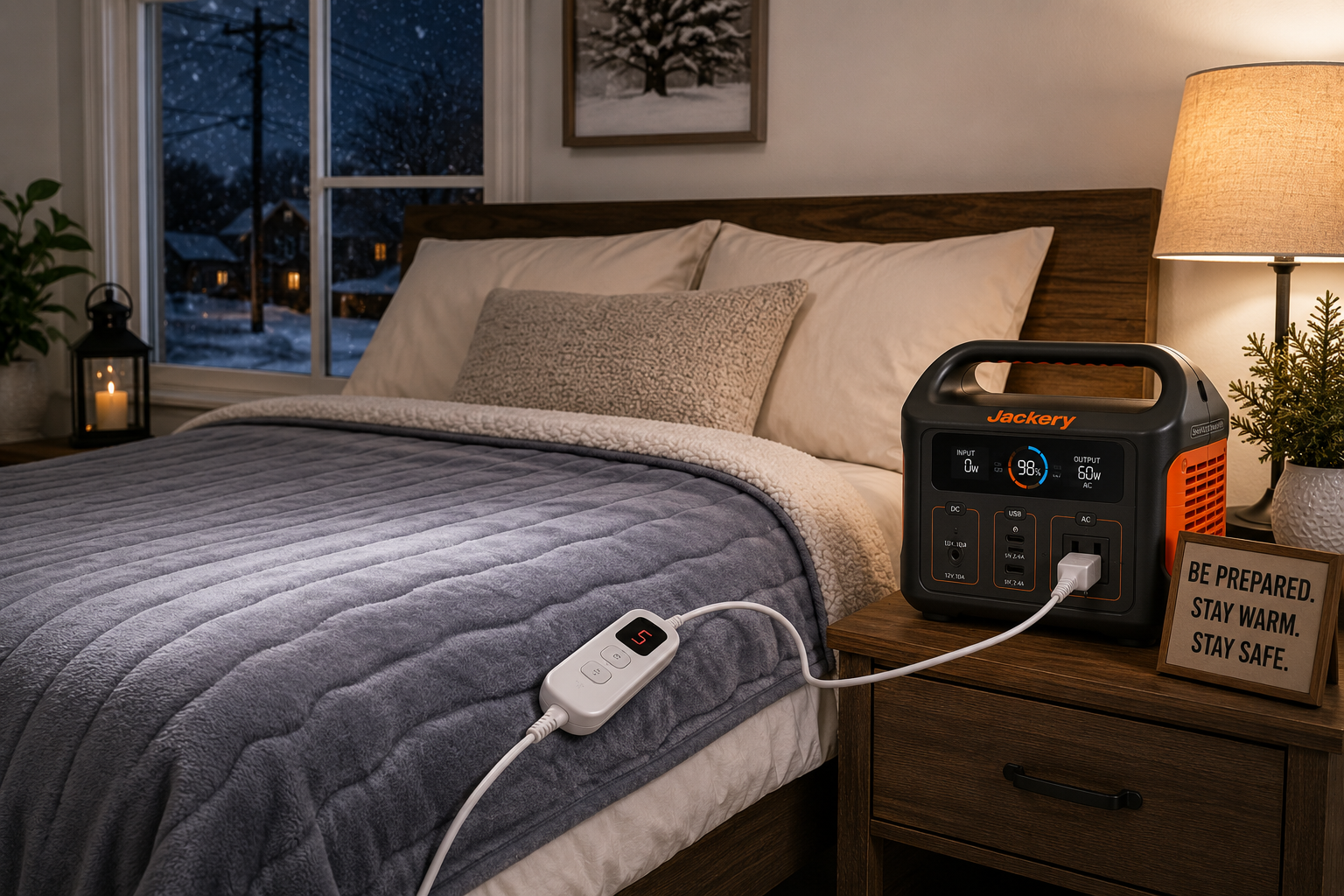
Can a Portable Power Station Run an Electric Blanket?
In most cases, yes.
Electric blankets are one of the easiest heating appliances to power with a portable power station because they consume far less electricity than electric space heaters or electric fireplaces.
Most models use between 50 and 200 watts, allowing many portable power stations to operate them for several hours—or even overnight, depending on battery capacity and the selected heat setting.
Before connecting your electric blanket, verify:
- Continuous output rating
- Battery capacity
- Manufacturer’s wattage specifications
- Total household electrical load
Always follow the manufacturer’s safety instructions when operating an electric blanket from any power source, including a portable power station.
Estimating Runtime
Runtime depends on two primary factors:
- The electric blanket’s power consumption
- The portable power station’s battery capacity
For example:
- A blanket operating at 60 watts can typically run much longer than a space heater because of its lower energy demand.
- A larger blanket operating at 150–200 watts will reduce runtime but remains significantly more energy-efficient than heating an entire room.
Using medium heat settings often provides an excellent balance between comfort and battery life during extended outages.
Choosing the Right Backup Power Solution
When selecting a portable power station for an electric blanket, consider the following.
Continuous Output Rating
Verify that the portable power station’s continuous AC output comfortably exceeds the blanket’s maximum running wattage.
Battery Capacity
Higher-capacity batteries provide longer overnight operation and allow additional essential appliances to run simultaneously.
Additional Appliances
Many homeowners also plan to power:
- Refrigerator
- Internet modem and router
- Phone chargers
- LED lighting
- CPAP machine
- Humidifier
Adding these electrical loads together helps determine the battery capacity required for your emergency preparedness plan.
Expert Tips
- Inspect the blanket for worn cords or damage before each season.
- Follow the manufacturer’s washing and storage recommendations.
- Use automatic shutoff features whenever available.
- Keep your portable power station fully charged before winter storms.
- Test your emergency backup setup before cold weather arrives.
Common Mistakes to Avoid
Avoid these common mistakes:
- Assuming all electric blankets use the same amount of electricity.
- Ignoring the manufacturer’s wattage specifications.
- Using damaged blankets or power cords.
- Forgetting to account for other appliances sharing the portable power station.
- Waiting until an emergency to verify your backup power system.
Frequently Asked Questions
Does an electric blanket use a lot of electricity?
No. Most electric blankets consume between 50 and 200 watts, making them one of the most energy-efficient electric heating appliances available.
Can I leave an electric blanket on all night?
Many modern electric blankets are designed for overnight use and include automatic shutoff timers. Always follow the manufacturer’s instructions for safe operation.
Can a portable power station run an electric blanket?
Yes. Most portable power stations can easily operate an electric blanket because of its relatively low power requirements.
Is an electric blanket more efficient than a space heater?
Yes. An electric blanket warms the person rather than the entire room, making it significantly more energy efficient than most electric space heaters.
Key Takeaways
- Most electric blankets use between 50 and 200 watts.
- Electric blankets consume far less electricity than space heaters.
- Most portable power stations can easily power an electric blanket.
- Medium heat settings help extend battery runtime.
- Always verify the manufacturer’s electrical specifications before selecting backup power equipment.
Conclusion
Understanding how much power an electric blanket uses can help you estimate operating costs, prepare for winter power outages, and select the right portable power station. Because electric blankets require relatively little electricity while providing effective personal warmth, they are one of the most practical appliances to include in an emergency backup power plan. Planning ahead allows you to stay comfortable while conserving valuable battery power during extended outages.