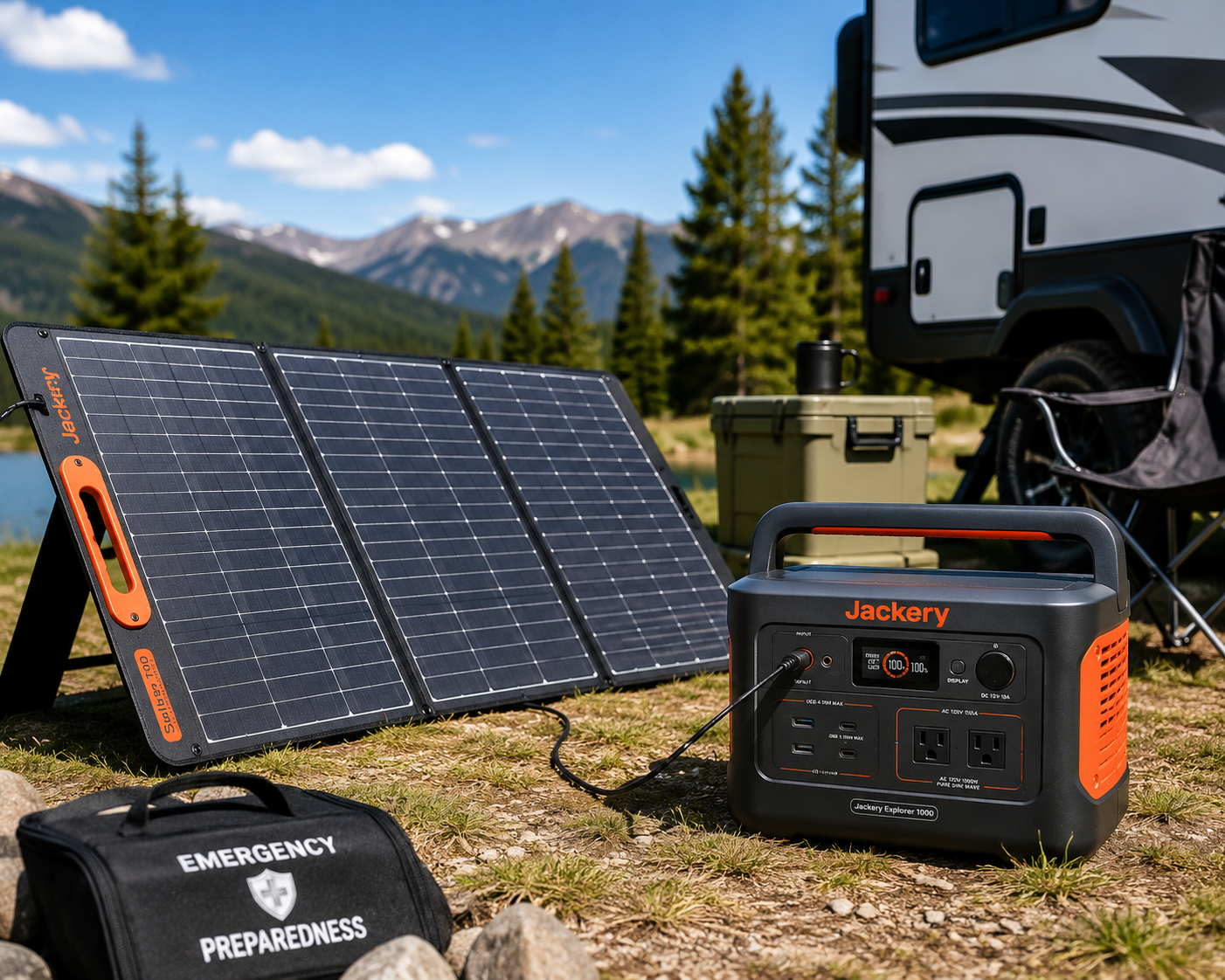
Portable power stations are only as useful as the method you use to recharge them. While plugging into a household outlet is the fastest option for many people, solar panels provide something just as valuable—energy independence. Whether you’re camping off-grid, preparing for extended power outages, or simply looking to reduce reliance on the electrical grid, pairing the right solar panels with your portable power station can make all the difference.
The challenge is that not all solar panels work equally well with every portable power station. Differences in wattage, connector types, voltage limits, portability, weather resistance, and charging efficiency can significantly affect performance.
This guide explains how to choose the best solar panels for your portable power station, compares the leading options from the major manufacturers, and helps you select the right panel based on your specific needs and budget.
At a Glance
Best For: Portable power station owners looking to maximize solar charging performance
Estimated Reading Time: 14 minutes
Last Updated: July 2026
Who Should Read This:
- Homeowners preparing for power outages
- Campers and RV owners
- Overlanding enthusiasts
- Emergency preparedness planners
- Anyone purchasing their first portable power station
What You’ll Learn:
- How solar panels work with portable power stations
- Which panel sizes make the most sense
- The differences between rigid and portable folding panels
- Which brands offer the best compatibility
- How to choose the right wattage for your needs
Why Choosing the Right Solar Panel Matters
A portable power station without an effective charging solution is only half of a backup power system.
During an extended outage, the battery will eventually become depleted. Solar panels allow you to continuously recharge the battery whenever sunlight is available, dramatically extending how long your backup power system can operate.
The right solar panel can:
- Recharge your battery significantly faster
- Improve charging efficiency
- Reduce downtime between uses
- Extend off-grid operation indefinitely under favorable conditions
- Increase your return on investment
The wrong panel may charge slowly, operate inefficiently, or in some cases not work at all due to voltage incompatibility.
How Solar Panels Charge Portable Power Stations
Portable power stations include a built-in solar charge controller that converts electricity generated by solar panels into energy that safely charges the internal battery.
Unlike permanently installed rooftop solar systems, portable solar charging is designed to be simple:
- Place the solar panel in direct sunlight.
- Connect the panel to the power station.
- The built-in charge controller regulates the incoming power. To learn more about how photovoltaic technology converts sunlight into usable electricity, see the U.S. Department of Energy’s guide to solar energy.
- The battery begins charging automatically.
Most modern power stations display:
- Current solar input (watts)
- Estimated charging time
- Battery percentage
- Solar charging status
This makes it easy to optimize panel placement throughout the day.
Understanding Solar Panel Wattage
One of the first specifications you’ll notice is wattage.
Solar panel wattage indicates the maximum amount of power the panel can generate under ideal laboratory conditions.
Common portable panel sizes include:
| Solar Panel Size | Typical Uses |
|---|---|
| 60W–100W | Small power stations, phones, tablets, lighting |
| 100W–160W | Weekend camping, small appliances |
| 200W | Most home backup and RV applications |
| 350W–400W | Large-capacity power stations and faster charging |
Real-world output is usually lower than the advertised rating because of:
- Cloud cover
- Temperature
- Panel angle
- Time of day
- Dirt or debris
- Seasonal sun intensity
Most users see approximately 70% to 90% of a panel’s rated output under good conditions.
Portable Folding Panels vs. Rigid Solar Panels
Choosing between portable and rigid panels depends on how you plan to use your portable power station.
Portable Folding Solar Panels
These are designed specifically for portability.
Advantages include:
- Fold into compact carrying cases
- Lightweight
- Easy to transport
- Simple setup
- Ideal for camping and emergency storage
Disadvantages include:
- Higher cost per watt
- Slightly lower durability
- Usually limited to smaller sizes
Portable folding panels are the preferred option for most portable power station owners.
Rigid Solar Panels
Rigid panels are commonly used for residential rooftop installations but can also charge portable power stations.
Advantages include:
- Lower cost per watt
- Excellent long-term durability
- Higher efficiency
- Better for permanent installations
Disadvantages include:
- Heavier
- More difficult to transport
- Require mounting hardware
- Less convenient during emergencies
Rigid panels are often the better value for homeowners planning a dedicated emergency backup system.
Connector Compatibility Is Critical
One of the most overlooked buying considerations is connector compatibility.
Even if two solar panels have the same wattage, they may not connect directly to your portable power station.
Common connector types include:
- MC4
- XT60
- Anderson
- DC7909
- DC5521
Many manufacturers include adapter cables, while others require them to be purchased separately.
Before buying any solar panel, verify:
- Connector type
- Maximum input voltage
- Maximum input current
- Supported solar wattage
Compatibility is far more important than choosing the highest advertised wattage.
Best Solar Panels by Brand
Many manufacturers design solar panels specifically for their own portable power stations. These panels generally offer the easiest setup and guaranteed compatibility.
EcoFlow Solar Panels
EcoFlow offers one of the widest selections available.
Popular sizes include:
- 110W
- 160W
- 220W
- 400W
Strengths include:
- Excellent build quality
- High conversion efficiency
- Waterproof construction on many models
- Easy integration with EcoFlow Delta and River series
EcoFlow’s larger panels are particularly well suited for homeowners building a serious emergency backup system.
Jackery SolarSaga Series
Jackery helped popularize portable solar charging.
Popular models include:
- SolarSaga 100
- SolarSaga 200
Advantages include:
- Lightweight
- Excellent portability
- Integrated kickstands
- Very simple setup
- Strong reputation for reliability
These panels are especially popular with campers and RV owners.
Bluetti Solar Panels
Bluetti produces several high-quality portable panels designed for larger battery systems.
Popular options include:
- PV120
- PV200
- PV350
Advantages include:
- Excellent charging performance
- Durable construction
- Strong compatibility with Bluetti power stations
- Good performance in less-than-ideal sunlight
Bluetti’s larger panels appeal to users running higher-capacity backup systems.
Third-Party Solar Panels Worth Considering
Although many people purchase solar panels from the same manufacturer as their portable power station, several third-party companies produce excellent alternatives that often cost less while delivering similar performance.
When shopping for third-party panels, always verify compatibility with your power station’s input voltage, current limits, and connector requirements before purchasing.
Some well-regarded manufacturers include:
Renogy
Renogy has built a strong reputation in the RV and off-grid community.
Strengths include:
- Excellent efficiency
- Durable construction
- Wide variety of rigid and portable models
- Good availability of accessories
- Competitive pricing
Renogy panels are especially popular for permanent emergency backup systems and RV installations.
BougeRV
BougeRV offers several portable folding panels designed for camping and emergency preparedness.
Benefits include:
- Lightweight construction
- Good efficiency
- Foldable designs
- Competitive pricing
- Compatible with many portable power stations using MC4 adapters
ALLPOWERS
ALLPOWERS produces affordable portable solar panels suitable for casual users.
Advantages include:
- Budget-friendly pricing
- Good portability
- Multiple wattage options
- Wide compatibility
These panels are often a good choice for first-time portable power station owners.
Choosing the Right Solar Panel by Portable Power Station Size
Matching the solar panel to your battery capacity helps reduce charging time while maximizing efficiency.
| Portable Power Station Size | Recommended Solar Panel |
|---|---|
| Under 300Wh | 60W–100W |
| 300–700Wh | 100W–160W |
| 700–1,200Wh | 200W |
| 1,200–2,000Wh | 200W–400W |
| Over 2,000Wh | Multiple 200W–400W panels (if supported) |
Always check your manufacturer’s maximum solar input rating. Purchasing more solar capacity than the power station can accept will not reduce charging time.
Monocrystalline vs. Polycrystalline Solar Panels
Nearly every premium portable solar panel today uses monocrystalline solar cells.
Monocrystalline Panels
Pros:
- Higher efficiency
- Better low-light performance
- Longer lifespan
- Smaller size for the same power output
Cons:
- Higher purchase price
Polycrystalline Panels
Pros:
- Lower initial cost
Cons:
- Lower efficiency
- Larger footprint
- Reduced performance in hot weather
For most portable power station owners, monocrystalline panels provide the best long-term value.
Weather Resistance and Durability
Portable solar panels spend much of their time outdoors, so durability matters.
Look for features such as:
- Weather-resistant fabric
- Tempered glass (rigid panels)
- Reinforced stitching
- ETFE protective coating
- Waterproof junction boxes
- Corrosion-resistant connectors
Keep in mind that weather-resistant does not always mean waterproof. Many folding panels should not be left outside during heavy rain or overnight unless specifically rated for those conditions.
Tips for Faster Solar Charging
Even the best solar panel performs poorly if it isn’t positioned correctly.
To maximize charging speed:
- Aim the panel directly at the sun.
- Reposition it every few hours as the sun moves.
- Keep the surface clean.
- Avoid partial shade—even a small shadow can significantly reduce output.
- Use shorter extension cables whenever practical to minimize power loss.
- Charge during peak sunlight hours, typically between 10 a.m. and 3 p.m.
These simple adjustments can noticeably improve charging performance.
Common Mistakes to Avoid
Many buyers make preventable mistakes when selecting or using solar panels.
Avoid these common errors:
- Buying based only on wattage
- Ignoring connector compatibility
- Exceeding the power station’s maximum solar input
- Expecting advertised wattage in every weather condition
- Leaving folding panels outside in severe weather
- Using damaged cables or connectors
- Forgetting to clean dust, pollen, or debris from the panel surface
A little preparation helps protect your investment and improves charging efficiency.
Frequently Asked Questions
Can any solar panel charge a portable power station?
No. The solar panel must be compatible with your portable power station’s voltage, current, connector type, and maximum solar input specifications.
Are manufacturer-branded solar panels better?
Not necessarily. Manufacturer-branded panels typically offer guaranteed compatibility and simple setup, while high-quality third-party panels can provide similar performance at a lower price.
Is a 100W solar panel enough?
A 100W panel works well for smaller portable power stations used to charge phones, laptops, lights, and other low-power devices. Larger batteries generally benefit from 200W or higher panels.
Can I connect multiple solar panels together?
Many larger portable power stations support multiple panels connected in series or parallel. Always follow the manufacturer’s specifications to avoid exceeding voltage or current limits.
Do solar panels work on cloudy days?
Yes, but they produce significantly less electricity. Charging times are longer under overcast conditions than in direct sunlight.
Expert Tips
- Purchase the largest compatible solar panel your portable power station can safely accept if faster charging is a priority.
- If you expect extended outages, consider adding a second compatible panel to improve charging capacity.
- Practice setting up your solar panels before an emergency so you’re familiar with the process.
- Store adapter cables with your power station to avoid searching for them when you need backup power.
Key Takeaways
- The best solar panel depends on your portable power station’s specifications and intended use.
- Compatibility is just as important as wattage.
- Monocrystalline panels offer the best combination of efficiency and durability.
- EcoFlow, Jackery, Bluetti, Renogy, BougeRV, and ALLPOWERS all offer quality options.
- Proper positioning and maintenance significantly improve charging performance.
- Investing in the right solar panel helps you get the most value from your portable power station while improving your preparedness for emergencies and off-grid adventures.
Conclusion
Choosing the best solar panels for portable power stations involves more than selecting the highest wattage available. The ideal panel balances compatibility, charging speed, portability, durability, and budget while matching your specific power station and intended use.
Whether you’re preparing for power outages, building an emergency backup system, or planning your next camping adventure, a properly matched solar panel can transform your portable power station into a reliable, renewable source of electricity. With the right setup, you’ll spend less time waiting for batteries to recharge and more time enjoying dependable power wherever you need it.
Related Articles
How to Connect a Portable Power Station to Solar Panels (Step-by-Step Guide)
How Long Do Portable Power Station Batteries Last?
Can a Portable Power Station Run a Refrigerator?
Best Portable Power Stations for Home Backup in 2026
How Long Does It Take to Recharge a Portable Power Station?
Portable Power Station vs Solar Generator Whats The Difference