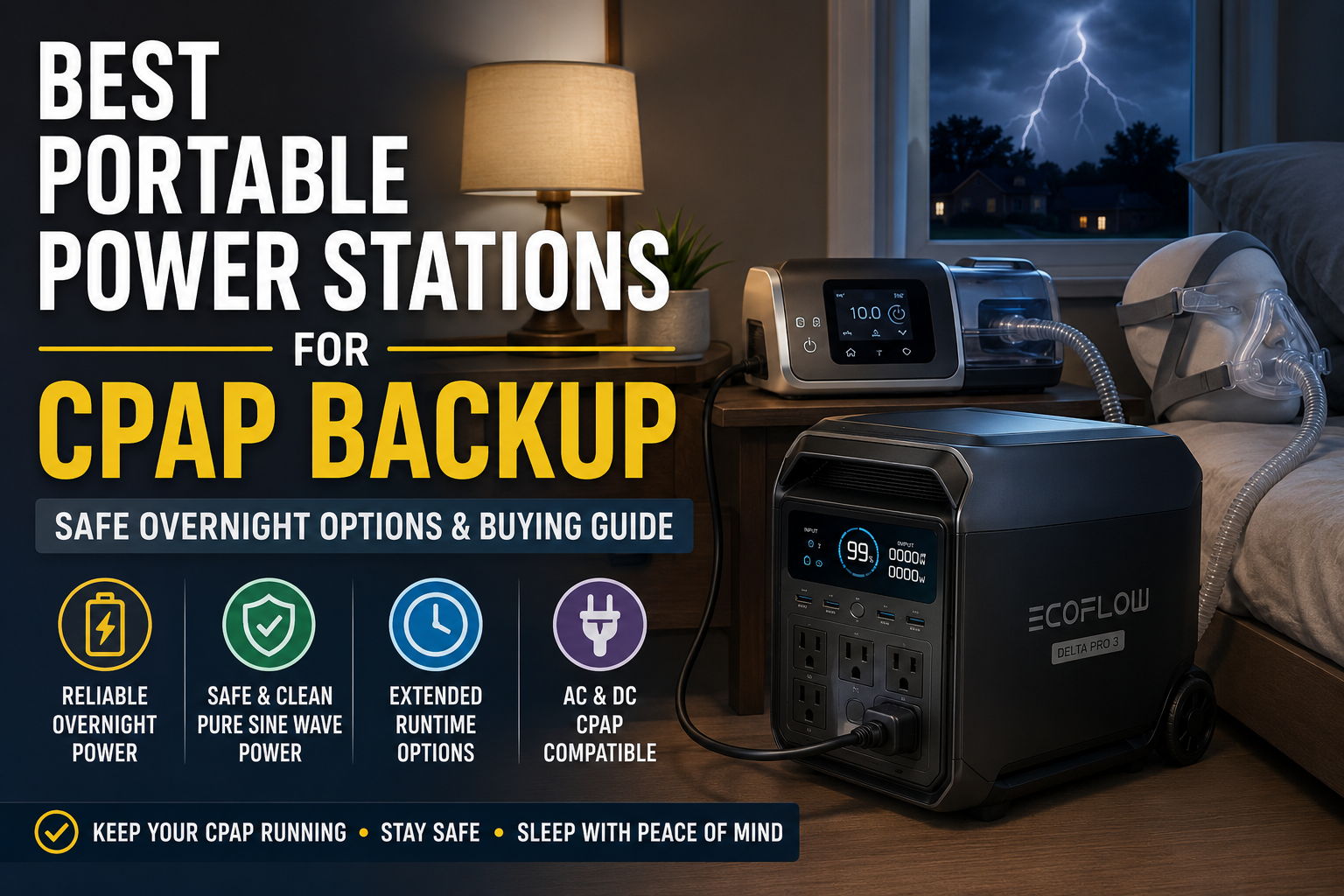
Portable power stations can provide dependable overnight backup for many CPAP machines during a power outage, helping users continue essential sleep therapy when the electrical grid goes down. However, not every portable power station is a good choice. Battery capacity, inverter quality, DC compatibility, and runtime all play a major role in determining whether your CPAP will operate safely through the night.
This guide explains how to choose the best portable power station for CPAP backup, compares top models, and highlights the features that matter most before you buy.
Why Choosing the Right Portable Power Station Matters
Unlike many household appliances, CPAP machines require consistent, clean power throughout the night. A backup battery that is too small may shut down before morning, while an undersized inverter can fail to start or operate certain machines correctly.
Selecting the proper portable power station helps ensure:
- Continuous overnight therapy
- Stable, pure sine wave power
- Longer battery life
- Quiet operation
- Safe indoor use
- Expandability for extended outages
For many households, a portable power station is also useful for powering phones, lights, internet equipment, and other essentials during an outage.
Key Features to Look For
Battery Capacity
Battery capacity is measured in watt-hours (Wh).
General recommendations:
| Typical Need | Recommended Capacity |
|---|---|
| One night | 500–800 Wh |
| Two nights | 1,000–1,500 Wh |
| Multi-day outages | 2,000+ Wh |
Actual runtime depends on:
- CPAP model
- Pressure settings
- Humidifier use
- Heated hose use
- DC vs. AC operation
Pure Sine Wave Inverter
Always choose a portable power station with a pure sine wave inverter.
Benefits include:
- Cleaner electrical output
- Better compatibility with medical devices
- Reduced risk of operational issues
- More efficient performance
Avoid inexpensive modified sine wave inverters whenever possible.
DC Output Compatibility
Many CPAP manufacturers offer optional DC power cables.
Using DC power instead of AC often:
- Extends runtime
- Improves efficiency
- Eliminates inverter losses
- Reduces overall battery consumption
Before purchasing a portable power station, verify that a compatible DC cable is available for your CPAP model.
Best Overall
EcoFlow DELTA Pro 3
Best for: Most CPAP users seeking maximum flexibility and long-term value.
Why it stands out
- Large battery capacity
- Excellent overnight runtime
- Expandable battery system
- Fast charging
- Pure sine wave inverter
- Excellent mobile app
- Solar charging support
Pros
- Multiple nights of backup
- Very reliable
- Easy expansion
- Excellent warranty
- Can power other household essentials
Cons
- Higher purchase price
- Larger than necessary for occasional travel
Best for
Homeowners preparing for extended outages who also want backup power for refrigerators, internet equipment, lighting, and medical devices.
Disclosure: As an Amazon Associate, EnergyReadyHome earns from qualifying purchases. This comes at no additional cost to you.
Best Value
Jackery Explorer 1000
The Jackery Explorer 1000 Plus offers an excellent balance of price, portability, and runtime.
Highlights include:
- LiFePO₄ battery
- Pure sine wave inverter
- Expandable battery options
- Lightweight design
- Reliable overnight CPAP operation
Ideal for:
- One to two nights of backup
- Emergency preparedness
- Weekend travel
- Smaller households
Disclosure: As an Amazon Associate, EnergyReadyHome earns from qualifying purchases. This comes at no additional cost to you.
Best for Maximum Runtime
BLUETTI AC200L
For users who want the longest possible runtime between charges, the BLUETTI AC200L is an outstanding option.
Advantages include:
- Large battery capacity
- Expandable system
- Long cycle life
- Fast charging
- Solar compatibility
This model can often provide several nights of CPAP operation depending on your machine settings.
Disclosure: As an Amazon Associate, EnergyReadyHome earns from qualifying purchases. This comes at no additional cost to you.
How Long Will a Portable Power Station Run a CPAP?
Estimated runtimes vary considerably depending on your equipment.
| Battery Capacity | Estimated CPAP Runtime* |
|---|---|
| 500 Wh | 1 night |
| 1,000 Wh | 2–3 nights |
| 2,000 Wh | 4–6 nights |
CPAP battery backup guidance from the American Academy of Sleep Medicine
*Actual runtime depends on machine model, pressure settings, humidifier use, heated tubing, and whether the machine operates using AC or DC power.
Ways to Extend Runtime
To maximize backup power:
- Turn off the heated humidifier when medically appropriate.
- Disable heated tubing if recommended by your provider.
- Use the manufacturer’s DC power cable.
- Fully recharge the power station after every outage.
- Keep the battery stored between approximately 30% and 80% charge during long-term storage, following the manufacturer’s recommendations.
- Test your complete backup setup before storm season.
Common Buying Mistakes
Avoid these common errors:
- Purchasing based solely on battery capacity.
- Ignoring inverter quality.
- Forgetting to check CPAP compatibility.
- Assuming every CPAP consumes the same amount of power.
- Buying a battery with no expansion capability if you live in an area prone to long outages.
- Waiting until a major storm is approaching before testing your backup system.
Frequently Asked Questions
Can a portable power station safely power a CPAP overnight?
Yes. Most quality portable power stations with a pure sine wave inverter can safely operate compatible CPAP machines overnight when properly sized.
Does using the humidifier reduce runtime?
Yes. Heated humidifiers can significantly increase power consumption and shorten battery life.
Is a larger battery always better?
Larger batteries provide longer runtime, but they also cost more and weigh more. Choose a size that matches your expected outage duration.
Should I buy an expandable model?
If your area regularly experiences multi-day power outages, expandable battery systems provide greater flexibility and future-proof your investment.
Can I recharge the power station with solar panels?
Many modern portable power stations support solar charging, allowing you to extend runtime during prolonged outages when sunlight is available.
Conclusion
A properly sized portable power station can provide dependable overnight CPAP backup while also supporting other critical household devices during a power outage. When comparing models, prioritize battery capacity, pure sine wave output, DC compatibility, expandability, and overall reliability rather than simply choosing the least expensive option.
Selecting the right system now can provide greater peace of mind and help ensure uninterrupted sleep therapy whenever the power goes out.
Related Articles
To help you build a complete medical backup power plan, explore these related EnergyReadyHome guides:
- Can a Portable Power Station Run a CPAP Machine? (Power & Runtime Guide)
- Can a Portable Power Station Run a CPAP Machine? (Overnight Runtime Guide)
- Backup Power for Medical Devices During a Power Outage
- How Long Can Medical Devices Run on Backup Power?
- What Medical Devices Need Backup Power During an Outage?
- Creating a Medical Emergency Power Checklist