Introduction
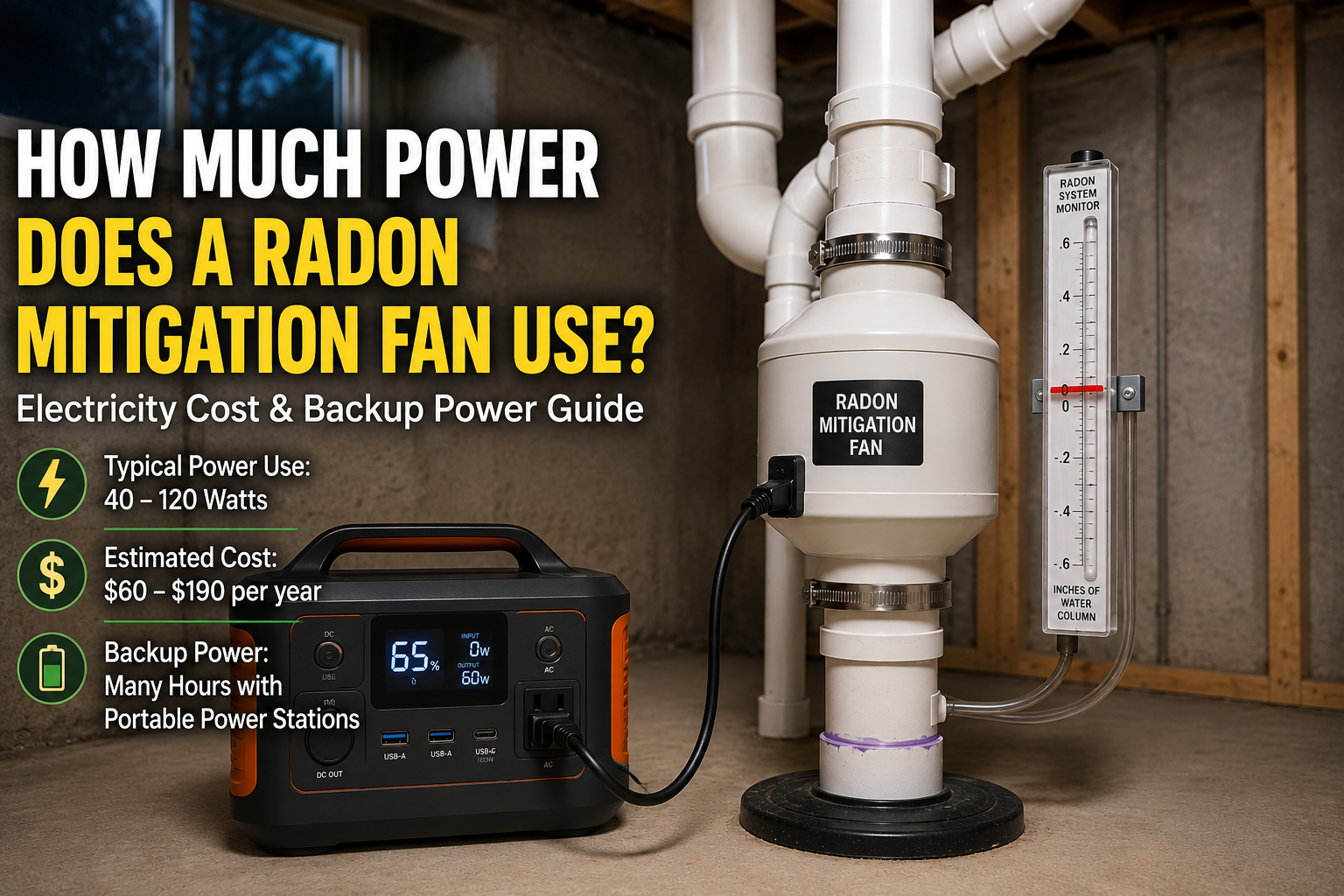
A typical residential radon mitigation fan uses between 40 and 120 watts of electricity, making it one of the lowest-power systems operating continuously in most homes.
Although the electrical demand is relatively small, the fan runs 24 hours a day to reduce radon gas levels beneath your home’s foundation. Understanding how much electricity your radon mitigation system consumes can help you estimate operating costs, choose the right backup power solution, and prepare for extended power outages.
The good news is that most radon mitigation fans are inexpensive to operate and are excellent candidates for backup power from a portable power station.
In this guide, you’ll learn:
- How much electricity a radon mitigation fan uses
- Typical annual operating costs
- Factors that affect energy consumption
- How to calculate your own fan’s power usage
- Which portable power station sizes work best during outages
At a Glance
| Category | Information |
|---|---|
| Best For | Homeowners with active radon mitigation systems |
| Estimated Reading Time | 9 minutes |
| Last Updated | July 2026 |
| Who Should Read This | Homeowners looking to understand energy use and backup power needs |
| What You’ll Learn | Fan wattage, operating costs, runtime estimates, and backup planning |
What Is a Radon Mitigation Fan?
A radon mitigation fan is the heart of an active radon reduction system.
Installed along the PVC vent pipe—typically in the attic, garage, or on the exterior of the home—it continuously draws radon gas from beneath the foundation and safely exhausts it above the roofline before it can enter the living space.
Because the fan operates continuously, homeowners often wonder how much electricity it consumes over the course of a month or year.
Fortunately, the answer is reassuring.
Typical Power Consumption
Most residential radon mitigation fans fall into one of three categories.
| Fan Size | Typical Running Watts |
|---|---|
| Small | 40–60 watts |
| Medium | 60–90 watts |
| Large | 90–120 watts |
Higher-capacity fans used in larger homes or homes with more complex mitigation systems may consume slightly more power, but these are less common in residential installations.
Compared to many household appliances, radon mitigation fans are remarkably energy efficient.
How Much Does It Cost to Operate?
Because radon mitigation fans run continuously, the monthly operating cost depends on three factors:
- Fan wattage
- Local electricity rates
- Number of hours operated
The basic formula is:
Watts × Hours ÷ 1,000 = Kilowatt-hours (kWh)
For example, a 60-watt fan operating 24 hours a day uses:
60 × 24 ÷ 1,000 = 1.44 kWh per day
Over an entire month, that equals approximately:
43 kWh
At an electricity rate of $0.18 per kWh, the monthly operating cost would be approximately:
$7.75 per month
Annual cost:
Approximately $93
Annual Operating Cost Examples
| Fan Wattage | Estimated Annual Cost* |
|---|---|
| 40 watts | ~$62 |
| 60 watts | ~$93 |
| 80 watts | ~$124 |
| 100 watts | ~$155 |
| 120 watts | ~$186 |
*Based on an electricity rate of $0.18 per kWh. Actual costs vary by location and utility rates.
Even larger residential radon fans generally cost less to operate annually than many major household appliances.
Why Do Some Radon Fans Use More Electricity?
Several factors influence energy consumption, including:
Home Size
Larger homes often require larger mitigation systems with higher-capacity fans.
Foundation Design
Homes with complex foundations, multiple slabs, or crawl spaces may require stronger airflow to maintain effective radon reduction.
Soil Conditions
Some soil types allow radon gas to move more freely than others, affecting the pressure required beneath the foundation.
Fan Model
Modern radon mitigation fans are generally more energy efficient than older models while maintaining effective performance.
Is Continuous Operation Necessary?
Yes.
Unlike appliances that cycle on and off, radon mitigation fans are designed to operate continuously.
Turning the fan off for extended periods allows radon gas to accumulate beneath the foundation and may gradually increase indoor radon levels.
Manufacturers and radon professionals generally recommend allowing the system to operate uninterrupted except during maintenance or unexpected power outages.
Choosing the Right Backup Power Solution
One of the biggest advantages of a radon mitigation fan is its low power consumption. Because most residential fans draw less than 120 watts, many portable power stations can keep them operating for extended periods during a power outage.
Below are approximate runtimes for a fan using 60 watts of continuous power.
| Portable Power Station | Approximate Runtime |
|---|---|
| 300Wh | 4–5 hours |
| 500Wh | 7–8 hours |
| 700Wh | 10–11 hours |
| 1000Wh | 14–16 hours |
| 1500Wh | 22–24 hours |
| 2000Wh | 30–33 hours |
Actual runtime depends on battery efficiency, inverter losses, ambient temperature, battery age, and the fan’s actual power consumption.
Can You Reduce a Radon Fan’s Electricity Usage?
Generally, no.
Radon mitigation systems are engineered to maintain a specific level of suction beneath your home’s foundation. Reducing the fan’s operating speed or shutting it off periodically can reduce the system’s effectiveness and allow radon levels to rise.
Instead of trying to lower energy consumption, homeowners should focus on:
- Keeping the system properly maintained.
- Replacing aging fans with newer energy-efficient models when necessary.
- Monitoring the system’s pressure gauge regularly.
- Ensuring the vent piping remains unobstructed.
The relatively low operating cost makes continuous operation the safest and most practical approach.
What Happens During a Power Outage?
When electrical power is interrupted:
- The mitigation fan stops running.
- Suction beneath the foundation is lost.
- Radon gas can begin accumulating beneath the slab.
- Indoor radon levels may gradually increase during extended outages.
Short outages typically present minimal concern, but prolonged outages can reduce the effectiveness of the mitigation system until power is restored. The U.S. Environmental Protection Agency explains how radon mitigation systems work and why continuous operation is important for maintaining reduced indoor radon levels.
For homeowners living in areas with frequent outages, a portable power station provides an effective backup solution that can keep the fan operating for many hours.
Should You Monitor Your Fan’s Performance?
Yes.
Most radon mitigation systems include a U-tube manometer or another pressure indicator that allows homeowners to confirm the fan is operating correctly.
You should periodically check for:
- A normal pressure reading.
- Unusual fan noise or vibration.
- Visible damage to vent piping.
- Ice or debris blocking exterior exhaust points.
- Warning lights on electronic monitoring systems, if installed.
Routine inspections help identify potential issues before they affect system performance.
Common Mistakes to Avoid
Avoid these common mistakes when evaluating your radon mitigation system:
- Assuming every radon fan uses the same amount of electricity.
- Estimating operating costs without checking the fan’s actual wattage.
- Turning the fan off to save electricity.
- Forgetting to plan for backup power during extended outages.
- Ignoring changes in pressure gauge readings.
- Delaying replacement of a failing or noisy fan.
A properly operating mitigation system provides continuous protection with relatively little energy consumption.
Frequently Asked Questions
Does a radon mitigation fan run all the time?
Yes. Residential radon mitigation fans are designed to operate continuously to maintain negative pressure beneath the home’s foundation.
Are radon mitigation fans expensive to operate?
No. Most residential systems cost only a few dollars per month to operate, depending on electricity rates and the fan’s power consumption.
Can a portable power station keep my radon fan running?
Yes. Because radon fans use relatively little electricity, many portable power stations can power them for many hours or even more than a day.
Should I unplug the fan when I’m away from home?
No. The fan should remain in continuous operation unless it is being serviced or replaced.
Key Takeaways
- Most residential radon mitigation fans use 40–120 watts of electricity.
- Typical annual operating costs range from approximately $60 to $190, depending on fan size and local electricity rates.
- Continuous operation is essential for effective radon reduction.
- Portable power stations provide an excellent backup power solution because of the fan’s low energy requirements.
- Regular system inspections help ensure reliable long-term performance.
Conclusion
Radon mitigation fans are among the most energy-efficient systems found in today’s homes. Although they operate continuously, their modest electrical requirements make them inexpensive to run and easy to support with a portable power station during power outages.
Understanding your fan’s power consumption allows you to estimate annual operating costs, select the right backup power solution, and maintain continuous protection against elevated indoor radon levels. With routine maintenance and a reliable emergency power plan, homeowners can help ensure their radon mitigation system continues operating whenever it’s needed most.
Related Articles
(Verified against the current EnergyReadyHome tracker)
- Can a Portable Power Station Run a Radon Mitigation System? (Power Requirements Explained)
- Can a Portable Power Station Run a Sump Pump?
- Can a Portable Power Station Run a Security System?
- Can a Portable Power Station Run a Wi-Fi Router and Modem?
- How to Choose the Right Size Portable Power Station for Your Home
- Best Ways to Extend Portable Power Station Runtime During an Outage