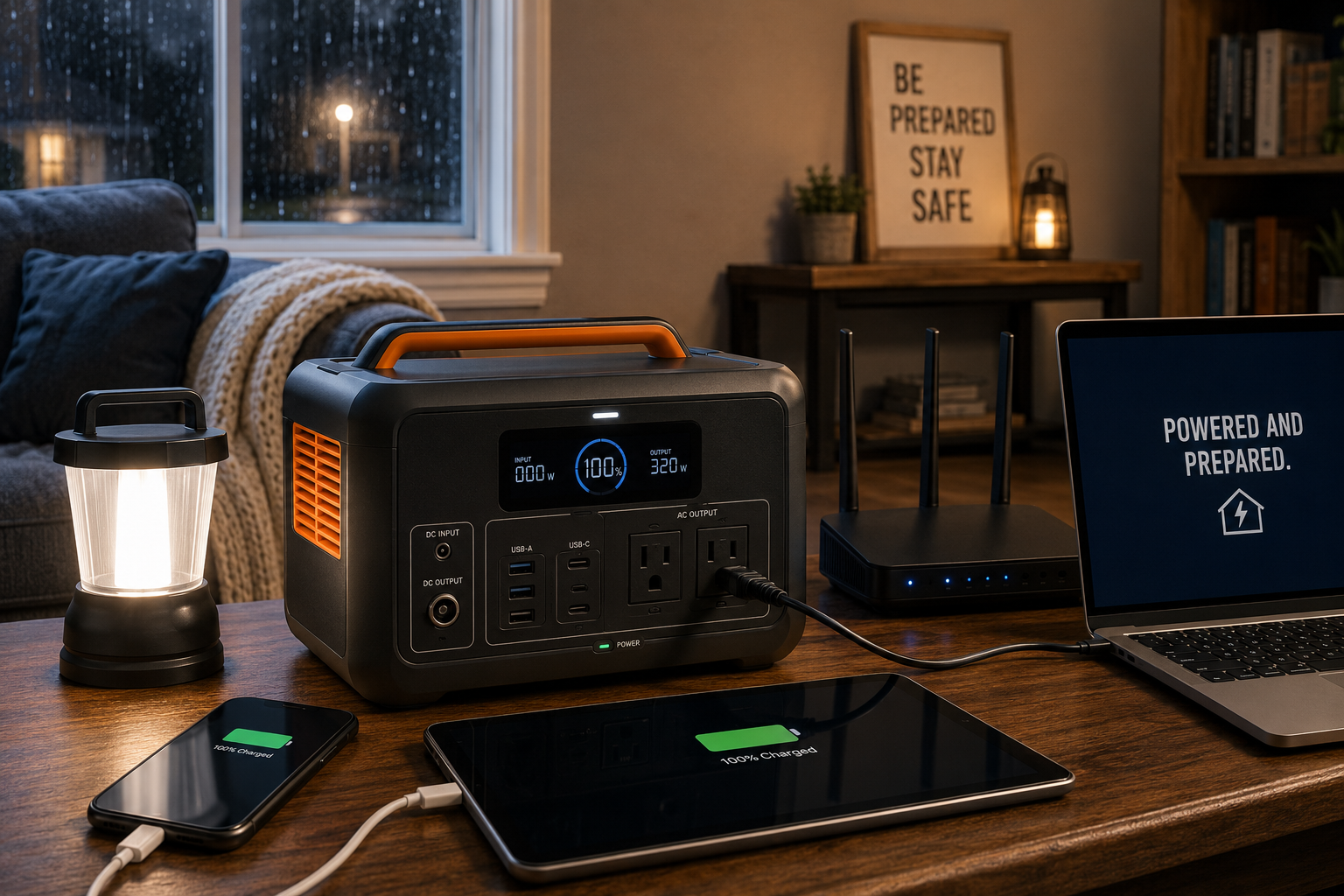
Knowing how to safely use a portable power station during a power outage can help protect your family, keep essential devices running, and avoid common mistakes when the electricity goes out. Portable power stations provide a quiet, emission-free source of backup electricity that can keep many household essentials running until utility power returns.
While these battery-powered units are generally safer than gasoline generators, they still require proper operation. Understanding how to use a portable power station correctly protects both your equipment and your family while helping you get the maximum performance from your investment.
Why Portable Power Stations Are Safer Than Gas Generators
One of the biggest advantages of a portable power station is that it produces no combustion gases during operation. Unlike gasoline, diesel, or propane generators, portable power stations do not emit carbon monoxide while supplying electricity.
This makes them suitable for indoor use in many situations, such as powering:
- Phones and tablets
- Laptop computers
- Wi-Fi routers
- Medical devices approved for battery operation
- LED lighting
- Televisions
- Small kitchen appliances (within the unit’s power rating)
Because there is no engine, portable power stations are also:
- Nearly silent
- Low maintenance
- Easy to operate
- Safe to store inside your home
- Ready to use with the press of a button
Although they eliminate many of the hazards associated with fuel-powered generators, they are not completely risk-free. Proper charging, storage, ventilation, and load management remain important.
Choose the Right Location
Place your portable power station on a stable, dry surface where it will not be exposed to moisture or extreme temperatures.
Good locations include:
- Living rooms
- Home offices
- Kitchens (away from sinks)
- Bedrooms
- Finished basements that remain dry
Avoid placing the unit:
- In standing water
- Near leaking windows
- Next to fireplaces or heating vents
- In direct sunlight for extended periods
- Where pets or small children may pull on cables
Keeping the unit clean and dry helps protect the battery and electronic components while reducing the chance of accidental damage.
Allow Adequate Airflow
Portable power stations generate heat while charging and while supplying electricity.
Most manufacturers include internal cooling fans that automatically regulate operating temperature.
For proper airflow:
- Leave several inches of space around the vents.
- Do not place blankets, clothing, or boxes over the unit.
- Avoid tightly enclosed cabinets while operating.
- Keep ventilation openings free of dust and debris.
If the cooling fans become blocked, the power station may reduce output or temporarily shut down to protect the battery.
Understand Your Power Limits
Every portable power station has two important electrical ratings:
Continuous Output
This is the amount of power the unit can safely provide continuously.
For example, a power station rated at 1,000 watts can generally operate appliances whose combined power draw stays below that limit.
Surge Output
Some appliances require extra power when first starting.
Refrigerators, freezers, sump pumps, and some power tools may briefly draw two to three times their normal running wattage.
Your power station must be able to handle both:
- The running wattage
- The startup surge
Otherwise, it may automatically shut down to protect itself.
Calculate Total Power Usage
Before connecting multiple devices, estimate their combined power consumption.
For example:
| Device | Approximate Running Watts |
|---|---|
| Wi-Fi Router | 15 W |
| Laptop Computer | 60 W |
| LED Lamp | 10 W |
| Television | 120 W |
| CPAP Machine | 40–90 W |
Combined, these devices use approximately 245 watts, which is well within the capability of many mid-sized portable power stations.
Adding a microwave, space heater, or hair dryer, however, could quickly exceed the unit’s capacity.
Checking appliance labels before an outage helps you create a realistic emergency power plan.
Connect Essential Devices First
During an extended outage, focus on powering items that provide the greatest benefit.
Typical priorities include:
- Medical equipment
- Refrigerators or freezers
- Phones
- Internet equipment
- Emergency lighting
- Weather radios
- Laptop computers
Entertainment devices can usually wait until essential needs have been addressed.
Prioritizing your electrical load helps extend battery runtime and ensures your most important equipment remains available when you need it most.
Charge the Power Station Safely
Whenever possible, begin charging your portable power station before the battery becomes critically low. Lithium iron phosphate (LiFePO4) and lithium-ion batteries generally perform best when they are not repeatedly discharged to 0%.
During a power outage, you may have several charging options:
- Wall outlet (when utility power returns)
- Portable solar panels
- Vehicle 12V outlet
- Dual charging methods (if supported by the manufacturer)
Always use the charging accessories recommended by the manufacturer to help protect the battery and maintain warranty coverage.
For additional recommendations on charging, storing, and handling rechargeable batteries, review the U.S. Consumer Product Safety Commission’s battery safety guidance before an emergency occurs.
Using Solar Panels During an Outage
One of the biggest advantages of many portable power stations is the ability to recharge using solar panels.
For the best performance:
- Place panels in direct sunlight whenever possible.
- Avoid shade from trees, buildings, or chimneys.
- Keep panels clean and free of leaves or debris.
- Position them according to the manufacturer’s recommended angle.
- Secure cables to prevent tripping hazards.
Remember that cloud cover, time of day, season, and weather conditions can significantly affect charging speed.
Use Extension Cords Correctly
Extension cords can make it easier to power appliances during an outage, but they should be used properly.
Choose extension cords that are:
- Rated for the electrical load.
- Free from cuts or damaged insulation.
- Fully uncoiled during heavy use.
- Appropriate for indoor or outdoor use as needed.
Avoid connecting multiple power strips or extension cords together, as this can increase electrical resistance and create unnecessary heat.
Keep cords out of walkways whenever possible to reduce tripping hazards.
Protect the Unit from Weather
Although many portable power stations are ruggedly built, most are not waterproof.
Avoid exposing the unit to:
- Rain
- Snow
- Standing water
- Excessive humidity
- Flooded basements
If you need to operate equipment outdoors, keep the power station indoors whenever possible and run appropriately rated extension cords to the outside equipment.
Always follow the manufacturer’s environmental operating limits.
Store It Properly Between Emergencies
Proper storage helps maximize battery life and ensures the unit is ready when the next outage occurs.
Good storage practices include:
- Store in a cool, dry location.
- Avoid prolonged exposure to excessive heat.
- Recharge the battery periodically according to the manufacturer’s recommendations.
- Keep firmware updated if applicable.
- Inspect cables and connectors several times each year.
Many owners find it helpful to check their emergency power equipment every month or at the beginning of each severe weather season.
Common Mistakes to Avoid
Even experienced owners occasionally make mistakes that reduce battery life or create unnecessary inconvenience.
Avoid these common errors:
Overloading the Power Station
Connecting too many high-wattage appliances can trigger overload protection or shut the unit down.
Forgetting to Recharge
After an outage, recharge the unit as soon as practical so it is ready for the next emergency.
Blocking Cooling Vents
Restricted airflow may cause the unit to overheat and temporarily reduce performance.
Leaving It in a Hot Vehicle
High temperatures can shorten battery life and may reduce long-term performance.
Ignoring Firmware Updates
Some manufacturers periodically release firmware updates that improve charging, battery management, or overall reliability.
Emergency Power Safety Checklist
Before using your portable power station during an outage, confirm the following:
- ✓ Battery is adequately charged.
- ✓ Unit is positioned on a stable, dry surface.
- ✓ Cooling vents are unobstructed.
- ✓ Connected devices remain within the unit’s power limits.
- ✓ Extension cords are properly rated.
- ✓ Cables do not create tripping hazards.
- ✓ Children and pets cannot easily disturb the equipment.
- ✓ Solar panels (if used) are securely positioned.
Following this checklist each time helps reduce the likelihood of problems during an emergency.
Frequently Asked Questions
Can I use a portable power station indoors?
Yes. Unlike gasoline generators, portable power stations do not produce carbon monoxide during normal operation. However, they should still be operated according to the manufacturer’s instructions with adequate airflow around the unit.
Can I leave a portable power station plugged in all the time?
Many modern units include battery management systems that allow continuous charging, but you should always follow the manufacturer’s guidance for your specific model.
Can I power my refrigerator continuously?
Many refrigerators can be powered by appropriately sized portable power stations, provided both the running wattage and startup surge are within the unit’s specifications. Runtime depends on battery capacity, refrigerator efficiency, and how often the compressor cycles.
Is it safe to use multiple appliances at once?
Yes, provided the combined electrical demand stays within the portable power station’s rated continuous output and surge capacity.
Should I completely drain the battery before recharging?
No. Most modern lithium batteries perform best when they are recharged before becoming completely depleted.
Final Thoughts
A portable power station can provide reliable backup electricity for many essential household devices during an outage, but using it safely is just as important as choosing the right model.
By understanding your power requirements, providing adequate ventilation, charging the unit correctly, protecting it from harsh weather, and following basic electrical safety practices, you can extend the life of your investment while keeping your family better prepared for unexpected emergencies.
A little planning before the lights go out can make a significant difference when the next power outage occurs.
Related Articles
- How to Keep Your Phone Charged During a Power Outage
- Prepare Your Home for a Multi-Day Power Outage
- Can a Portable Power Station Run a Refrigerator?
- Can a Portable Power Station Run a Chest Freezer?
- How Long Will Food Stay Safe in a Freezer During a Power Outage?
- Best backup power options for apartments. Simple solutions that work.