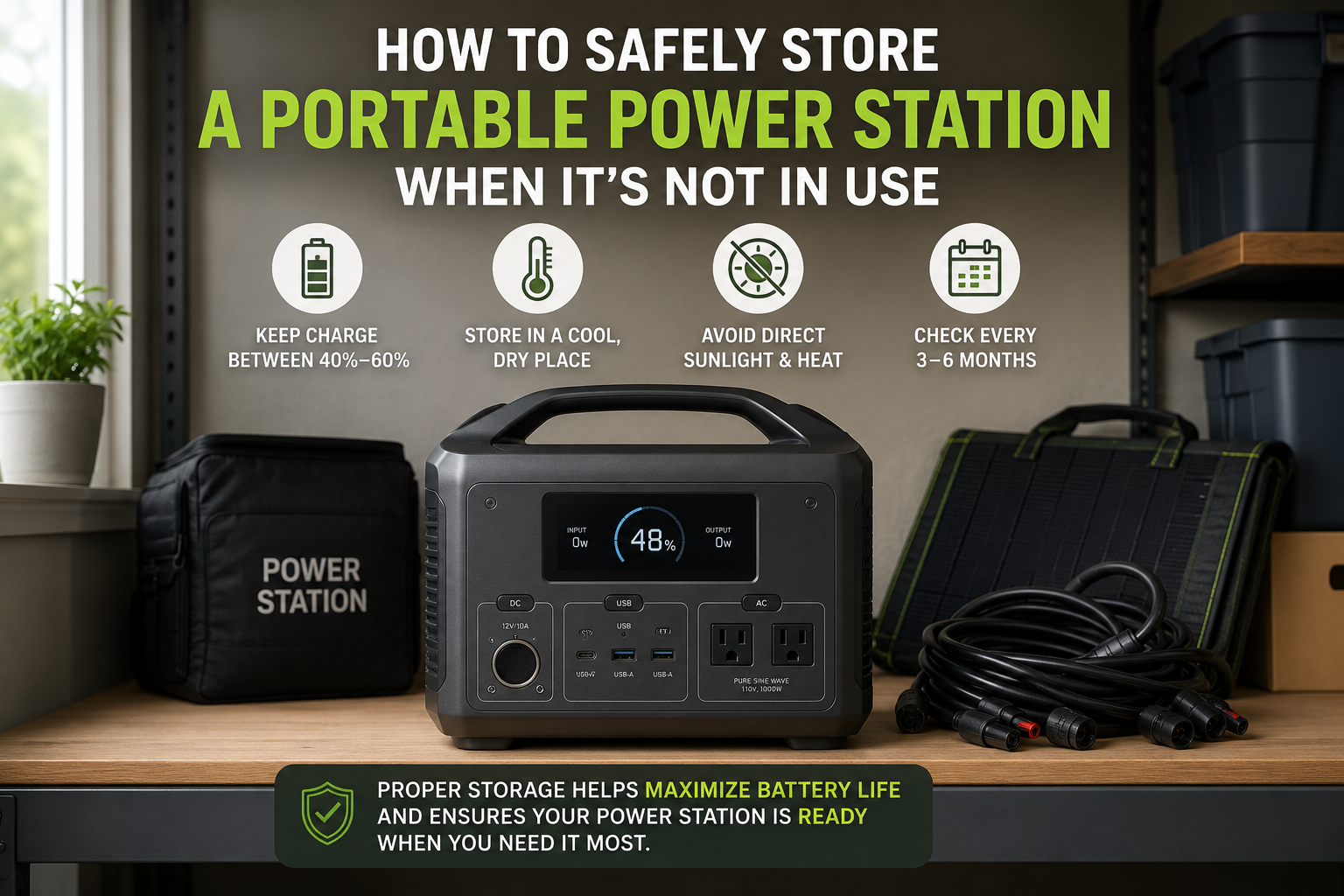
Portable power stations are built to provide reliable backup power when you need it most. But if you store one incorrectly between uses, you can shorten its battery life, reduce its performance, or even damage the battery permanently.
Fortunately, proper storage is simple. By keeping your portable power station at the correct charge level, protecting it from extreme temperatures, and performing occasional maintenance, you can help ensure it’s ready for your next camping trip, power outage, or emergency.
This guide explains exactly how to store a portable power station safely, whether you’re putting it away for a few weeks or several months.
Why Proper Storage Matters
Modern portable power stations are a significant investment, often costing anywhere from a few hundred dollars to several thousand. Most use advanced lithium-ion or LiFePO₄ (Lithium Iron Phosphate) batteries designed to last for years—but only if they’re properly maintained.
Poor storage practices can lead to:
- Reduced battery capacity
- Shorter battery lifespan
- Longer charging times
- Inaccurate battery percentage readings
- Permanent battery damage
- Reduced emergency reliability
The good news is that most storage-related problems are completely preventable.
The Best Battery Charge Level for Storage
One of the biggest mistakes owners make is storing a portable power station either completely full or completely empty.
For most manufacturers, the ideal storage charge is between 40% and 60%.
This range minimizes stress on the battery’s internal chemistry while providing enough reserve power to prevent the battery from falling into an excessively discharged state during storage.
Avoid Storing at 100%
Keeping a battery fully charged for long periods places unnecessary stress on its cells, particularly if it’s stored in a warm environment.
While occasionally leaving the battery fully charged isn’t harmful, storing it that way for several months may gradually reduce its long-term capacity.
Never Store It Completely Empty
Allowing a battery to remain at or near 0% is even more damaging.
If the battery self-discharges below its safe operating voltage, the internal battery management system (BMS) may prevent it from accepting a charge. In severe cases, the battery could become permanently unusable.
Store Your Portable Power Station Indoors Whenever Possible
Temperature is one of the most important factors affecting long-term battery health.
The ideal storage location is:
- Cool
- Dry
- Well ventilated
- Away from direct sunlight
- Protected from moisture
A finished basement, climate-controlled utility room, interior closet, or home office often provides excellent storage conditions.
Avoid Extreme Heat
Heat is the enemy of lithium batteries.
Long-term exposure to high temperatures accelerates battery aging and reduces the number of charge cycles the battery can deliver over its lifetime.
Avoid storing your power station in:
- Attics
- Uninsulated garages during summer
- Vehicle trunks
- Metal sheds
- Areas exposed to direct sunlight
Even if the unit is turned off, excessive heat continues to degrade the battery over time.
High temperatures can permanently reduce battery capacity over time. The U.S. Department of Energy also recommends following proper lithium-ion battery safety and storage recommendations to help maximize battery performance and reduce safety risks.
Protect It From Freezing Temperatures
Cold weather affects batteries differently than heat.
While most portable power stations tolerate cold storage reasonably well, freezing temperatures can temporarily reduce battery performance.
More importantly, many lithium batteries should not be charged while frozen.
If your power station has been stored in a cold garage or shed during winter:
- Bring it indoors.
- Allow it to warm to room temperature.
- Only then recharge or operate the unit.
Following this simple step helps protect the battery from unnecessary stress.
Keep the Unit Clean Before Storing
Before putting your portable power station away, take a few minutes to clean it.
Wipe away:
- Dust
- Dirt
- Grass
- Sand
- Moisture
- Debris around vents
Check that cooling vents remain unobstructed and inspect charging ports for dirt or corrosion.
Keeping the unit clean helps maintain proper airflow and prevents contaminants from entering electrical connections.
Disconnect All Accessories
Before storage, unplug everything connected to the power station.
This includes:
- Solar panels
- AC charging cables
- Car charging adapters
- USB devices
- Appliances
- Extension cords
Leaving accessories connected can sometimes allow small amounts of standby power draw or expose connectors to unnecessary wear.
Storing cables separately also reduces strain on the ports.
Turn the Unit Completely Off
Many portable power stations have a true power-off mode.
Before storing the unit:
- Turn off all AC outputs.
- Turn off all DC outputs.
- Shut down the main power switch according to the manufacturer’s instructions.
Some models continue drawing a small amount of power if left in standby mode.
Fully powering down the unit helps preserve battery charge during long-term storage.
Choose a Safe Storage Location
A good storage location should be:
- Stable and level
- Dry
- Free of excessive dust
- Away from chemicals
- Away from flammable materials
- Out of direct sunlight
- Out of reach of small children and pets
Avoid placing heavy objects on top of the power station, as they can damage the housing or ventilation openings.
How Often Should You Check a Stored Portable Power Station?
Even when powered off, portable power stations slowly lose charge over time. This natural process, called self-discharge, varies by manufacturer and battery chemistry.
A good rule of thumb is to inspect your power station every three to six months.
During your inspection:
- Check the remaining battery percentage.
- Recharge the battery back to approximately 40%–60% if needed.
- Inspect the case for damage.
- Verify the charging ports are clean.
- Confirm the unit powers on normally.
Spending just a few minutes on periodic maintenance can significantly extend the life of your investment.
Should You Leave It Plugged In All the Time?
Many newer portable power stations include intelligent battery management systems that help protect the battery while connected to AC power.
However, for long-term storage, continuously leaving the unit plugged into a wall outlet is generally not recommended unless the manufacturer specifically states it is safe for your model.
Instead:
- Charge the battery to the recommended storage level.
- Disconnect the charger.
- Store the unit properly.
- Check it periodically.
Following the manufacturer’s guidance helps maximize battery longevity.
Should You Remove the Battery?
Unlike many cordless power tools, portable power stations typically have integrated batteries that are not designed to be removed.
There is no need—and generally no safe way—to remove the battery before storage.
Instead, focus on:
- Proper charge level
- Correct storage temperature
- Periodic inspections
- Keeping the unit clean and dry
What About Solar Panels?
If you use portable solar panels with your power station, they also benefit from proper storage.
Before storing them:
- Disconnect them from the power station.
- Wipe off dirt, dust, pollen, or bird droppings.
- Allow them to dry completely if they were exposed to rain.
- Avoid folding flexible panels while wet.
- Store them flat or in their protective carrying case.
Keeping your solar panels clean and protected helps maintain charging efficiency and extends their service life.
Common Storage Mistakes to Avoid
Avoid these common mistakes that can shorten battery life or reduce performance:
Storing the Battery Completely Empty
An empty battery can self-discharge below safe voltage levels, making recovery difficult or impossible.
Leaving the Unit in a Hot Garage
High temperatures accelerate battery aging, even when the power station is turned off.
Ignoring It for a Year or More
Periodic inspections help ensure the battery stays within a healthy charge range.
Blocking the Cooling Vents
Do not wrap the power station tightly in blankets, plastic bags, or other materials that trap moisture or block ventilation.
Exposing It to Water or High Humidity
Although many power stations are durable, prolonged exposure to moisture can damage electronic components and electrical connectors.
Frequently Asked Questions
Can I store my portable power station in my garage?
Yes, if the garage remains relatively cool, dry, and within the manufacturer’s recommended storage temperature range. Climate-controlled indoor locations are generally a better choice.
Can I leave my portable power station in my car?
It’s best to avoid long-term vehicle storage. Cars can reach extremely high temperatures in summer and freezing temperatures in winter, both of which can shorten battery life.
Should I fully charge it before hurricane season or storm season?
Yes. If severe weather is approaching, charge your portable power station to 100% so it is ready to provide emergency backup power. After the emergency season has passed, return the battery to the recommended storage level if it will not be used for an extended period.
How long can a portable power station sit unused?
Most quality portable power stations can remain safely stored for several months when maintained correctly. Checking the battery every three to six months helps ensure it remains healthy and ready for use.
Final Thoughts
Proper portable power station storage requires only a few simple habits, but those habits can significantly extend battery life and improve long-term reliability.
Store the battery at approximately 40% to 60% charge, keep it in a cool and dry location, protect it from extreme temperatures, inspect it every few months, and always follow the manufacturer’s recommendations for your specific model.
With just a little preventive care, your portable power station will be ready when you need it most—whether that’s during a power outage, a camping trip, or your next outdoor adventure.
Related Articles
Portable Power Station Maintenance Checklist
Can a Portable Power Station Run a Refrigerator?
Best Backup Power Options for Apartments: Simple Solutions That Work
Portable Power Station Maintenance Checklist: Keep Your Battery Ready for the Next Emergency
Solar Generator vs Portable Power Station: What’s the Difference?